Éire Literature

Welcome to my page! I’m using this blog to share my personal works while I’m in college and have the time to write freely. Hope you enjoy!

  • I was recently asked the question “Is Love an Option” by one of my close friends. Although I wouldn’t say I’ve experienced the cliche version of love that we all know it to be. I’ve experienced many different types of love: familial, platonic, and a type of romantic affection. Love comes in all shapes and sizes, but do we really know how it starts? Having a crush or being attracted to a person can come naturally or be all consuming, but love doesn’t follow that same criteria. Love is slow and almost goes unnoticed until you find that it’s already there. I’ve watched everyone around me fall in and out of love over the years, and it honestly never looks appealing. I’ve watched my friends fight over trivial things with their boyfriends but refuse to see their flaws at the same time. Once I decide to question them, I always get the same line: “You’ll understand when you’re in love.” 

    This remark used to irritate me; I felt like a child being scolded by an adult for something I couldn’t comprehend. Since I was young, I’ve loved the idea of romance, whether it be in books or films, I couldn’t get enough of it, but the way love is interpreted in these forms is very different to the real world. Love is scary and unsettling; you never really know the outcome. Yet we still continue to love as much as we can, over and over again. Maybe it’s humans that have this affliction; we are made to naturally crave love. Some have a worse affliction than others and take whatever they are given. Even the phrase “I love you” is confusing. It’s commonly said between friends and family, but when it comes to romantic relationships, no one has the answers. Everyone I know has said the phrase at different points in their relationships, and every single one of them still doesn’t think they got it right. Too early or too late, or the wrong timing altogether. Why is it that these types of relationships are so hard to navigate? Even the sayings regarding love make it sound unnerving: “Love makes you crazy” or “Love conquers all.” 

    For those like me, who haven’t experienced this form of love, it sounds frightening and controlling. Romantic love from an onlooker’s perspective doesn’t look pretty or desireable; it seems like something no human on earth has fully figured out. Every piece of literature I’ve read has been influenced by some sort of love, and it always ends with tragedy or change. All of these factors seem to indicate that love is necessary to human life and progression; everything we do involves love. Whether it be protecting our families, hugging our friends, or being with the ones we love. Even if I decided that love was an option, it seems as though humans can’t help but pick love again and again.  

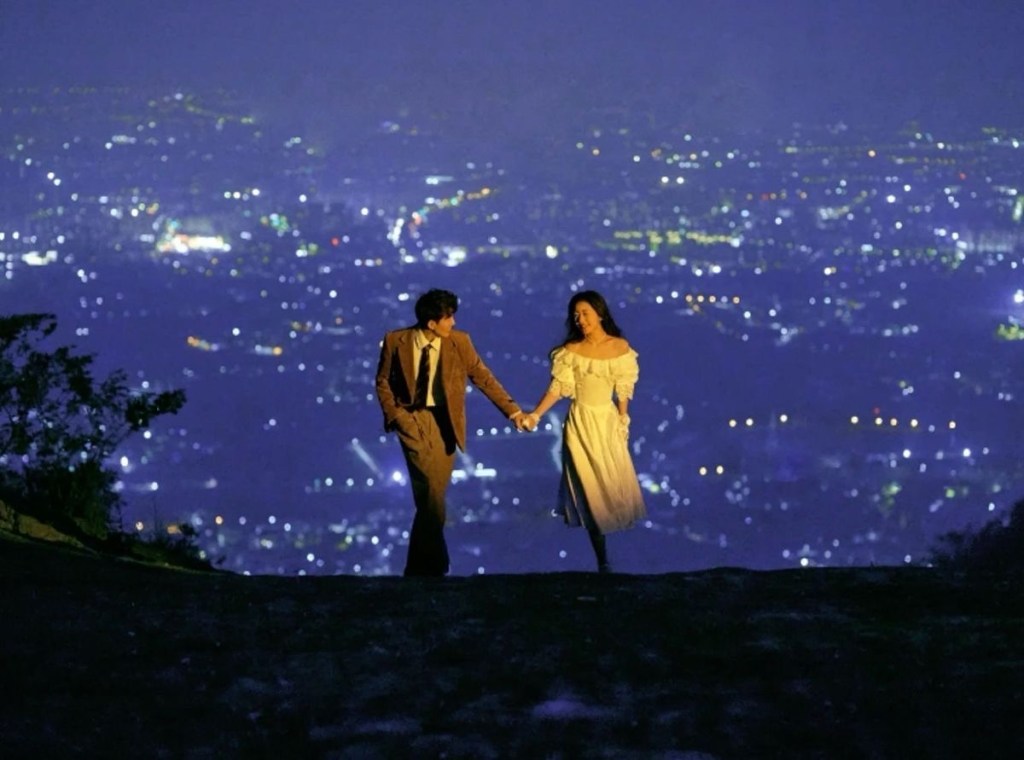
  • Most of my writing is usually inspired by new films in theaters or pieces of literature that inspired them. My most recent fixation is the new romance movie Eternity. Over the holidays, I haven’t had much to work with, but for some reason, this saddening film struck a chord with me. It follows a couple who have both recently passed away and are stuck between life and death, deciding where they should spend eternity. The husband, Larry, passes away first and is determined to wait for his wife, Joan, whom he has been married to for sixty-five years. Joan arrives only a week later, after dying from cancer, and is shocked to find herself reunited with her first husband, who died in battle. It’s an amusing premise, but as the story unfolds, it becomes increasingly complex. Joan has to decide who she wants to spend the rest of eternity with. While she’s been married to one for sixty-five years, she never got to have a life with the other. 

    As the movie progressed, I started to adore Joan more and more. Her thought process is very realistic to what I would have done myself in her situation, and towards the middle, she chooses herself. She doesn’t want to pick one or the other, so she picks neither. I honestly felt this was the best option for Joan, even though it wasn’t the direction the film was going in. The director uses the trope of first love versus last love. First love is exciting and passionate, but simple and often short-lived. While her last love had hardship and a presumed sedentary lifestyle, it had comfort and peace. Joan figures out by the end, after picking an eternity with Luke, her first husband, that although she was happiest with him, life has so much more to offer. The smallest things, like bickering in the car, raising children, and reminding each other to take medication, can be the things that make life so rewarding. Joan finally realizes the mistake of picking her young love and goes back to find Larry amidst the chaos. The couple finally reunites to find themselves in an abandoned eternity, away from everyone else, and decide to spend their eternity there. 

    People my age seem to have a fascination with the idea of first love. Countless people I’ve met seem unsettled by the idea that whoever they are with will never love them as much as they did their first love. This is usually targeted towards male audiences, and the notion that they never truly get over it. It’s a heartbreaking thought that so many in relationships choose to focus on, but this film eased my mind. Audiences assume that she will end with her first love by the way the movie is portrayed, as well as our preconceived notions of the beauty of a first love. First love doesn’t have to be everything we think it is. We can see that the hardship and countless years of shared time brought them closer together than she and Luke ever were. 

    Joan’s most important line in the film is when she finally has the courage to tell Luke that she made a mistake; “It was young love, it was everything. But love isn’t just one happy moment, right? It’s a million.” By this point, my eyes were filled with tears by this simple conversation between them. Even though this film has a very fictional plot, the characters and dialogue felt so unbelievably real. With one sentence, everything else clicked into place after so much uncertainty. 

    Although young love is full of fun and excitement, spending a lifetime together and learning to overcome hardship is that much stronger. Each character that is depicted in the film is so complex and interesting that we end up rooting for all of them at once. Alongside the first love versus last love, we also have the overwhelming concept of time. Time is brought up again and again as a way to justify their actions or decisions. Joan thinks she should stay with Larry because they have been married sixty-five years, but she should go with Luke because he’s been waiting sixty-seven years. We go back and forth between these options until the answer becomes entirely unclear. This almost feels like a nod to real life; time isn’t the reason we fall in love or stay in love. Sometimes things just aren’t meant to be, and we can’t force them to be. Love is supposed to be and always is complex, and the answer isn’t always clear.

  • Ever since I was young, my favorite flowers have been lilies of the valley. Maybe it was because I played Animal Crossing games growing up, and you were always awarded with a lily of the valley when you completed most of the game. But they always reminded me of willow trees; they looked sullen and fragile. Most storybooks use willow trees to depict grief or mourning, but I always thought they were the most beautiful. I never admired the picturesque green fields as much as I did the dark shade of the willows or drooping flowers. As I got older, I continued to revere these flowers, and it wasn’t until recently that I found out they’re poisonous. 

    The lily of the valley is considered a flower of love, so I found it was strangely symbolic that they were poisonous at the same time. Lilies of the valley are usually portrayed as innocent and beautiful but rare and out of reach. Similar to real beauty, it’s intertwined with violence and seduction, making the once beautiful flower a symbol of lust. The most perfect beauty is also presented as innocent and as untouched as budding flowers. Throughout literature, we see beauty and innocence usually as a downfall for most characters; it’s something that can never be properly obtained. A perfect portrayal of this is Eve in Milton’s ‘Paradise Lost.’ The Garden of Eden is supposed to be the picture of perfection, and Eve is supposed to obey Adam’s every need like God intended. She is the blueprint of innocence and beauty, but these very things lead her to the downfall of humanity. 

    It’s rare to see a character that only benefits from these traits. Lilies of the valley often look edible and approachable, but they will lead to great danger and even death. Innocence leads to temptation and curiosity, like the forbidden fruit which leads to downfall. These flowers, being flowers of love, always accurately shows that love is painful and destructive, but it’s usually wrapped in tenderness, like these gorgeous flowers. The color white is also a symbol of purity in flowers like the lily of the valley. This so-called love is also the corruption of purity and how that innocence poisons rather than heals showing the danger underneath it.

  • The metaphorical meaning behind spiderwebs has been explored in literature for thousands of years, dating back to the 6th century BCE, when it was often used in Greek philosophy to convey fragility and political discourse. Spiderwebs or cobwebs can be seen as intricate, fragile, yet dangerous and trapping at the same time. Spiders place bait to catch their prey, leading them to their demise. They are also similar to snowflakes; the designs have radical symmetry and no two webs are the same. They are beautiful yet eerie in their purpose. We don’t often see hunting as something that is breathtaking. We wince every time we see gazelles being torn apart by lions on nature channels. Why is it that spiders get away from this conception? 

    The new ‘Chainsaw Man’ movie that recently aired this month briefly touches on this concept. The film is supposed to mess with our preconceived notions of fear and beauty. One of the most influential moments of the film is when the two main characters are teaching each other how to swim. While we watch this seemingly sweet and innocent action, we are clearly able to see the progression of a spider spinning its web. As the moment becomes more sinister and we feel a sense of dread as onlookers, we see a moth caught in the web, covered in drops of water above the pool. Once the scene ends, the spider is seen devouring the moth tangled in the web. This represents the ending of their childhood or innocence. They are both swimming without clothes on, but the scene is depicted in such a light and hopeful manner that it seems completely natural and childlike. The story depicts exactly this progression. 

    The story deeply explores the loss of innocence and how the characters seem much older than they are. We never realize this fact as watchers until they return to a school-like setting, and we realize that normal kids their age should be in classrooms. While the film explores innocence, it also carefully suggests that this is the product of raising children as weapons and state-directed violence. Although watchers are heavily targeted towards the main character, by the end of the film, we can see the battle between good and evil and the manipulation of both young characters. They were both used as assets by two different sides and never got to experience a real childhood. They never had a chance at real life. The spiderweb is the perfect analogy for what both characters experience. The web is the system that controls them, and the spider is the character who consumes the other, leaving them both with nothing. 

  • One of Aesop’s most famous fables is the question of Would you rather be a city mouse or a country mouse. The country mouse lives simply, eating only basic things, and doesn’t have much to do on the wide-open farmland, but it’s a safe place for a mouse to live peacefully. While the city mouse lives with much more extravagant food options and a whole city to explore, but risks its life every day running into humans and cats. Many would argue that the city mouse has it better, but in the original fable, the country mouse admits by the end of his visit to the city that he would rather have safety and security while eating rather than always being in a constant state of peril. How can you enjoy the taste of your food if you are in fear?

    The new ‘Chainsaw Man’ movie uses this example throughout the film as a conversation topic between characters. It seems like a very straightforward question, but the closer you look, the more you see the plotline following the exact story of the fable. ‘Chainsaw Man’ uses countless real world problems of government control, insecurity, and childhood trauma throughout its narrative. Instead of one antagonist to despise for all the pain caused in the story, there are countless uncontrollable factors. This is purposely done to make watchers feel a sense of uncontrol and hopelessness, similar to how the characters feel in their lives. 

    The story follows a young boy named Denji, who is around the age of sixteen. He was taken in by public safety from his horrible life of trying to pay off debt left by his deadbeat father, by the yakuza or mafia. He did so by killing devils for them, because of this he never went to school and never had a real life of his own. He is found useful by the government because he is now considered part devil and part human. We watch his character experience everyday things that we all take for granted, like bathing, eating breakfast, and talking to people his age. But this new life of his has come at a cost. As the film progresses, we start to see the instability in his new life; he is in even more danger than before and is being used as a pawn by the government. No matter where we are in the story, Denji is being used by some kind of authority. 

    The second character we see throughout the film is Reze, a young girl similar in age to Denji. They met randomly one day while trying to escape the rain in a telephone booth. He is oddly attracted to her, and she helps him discover more aspects of life he’s never experienced before. Such as going to school and learning how to swim. Although they are small acts, they are huge portions of the film because they are so foreign to Denji. Reze ends up being a different character than we expect. She’s actually a devil similar to Denji and was using him in order to steal his heart. This also has symbolic meaning after their time together. After this reveal in the film, we see Denji fall more into a state of distrust and deception from others. He often questions if she ever really cared for him and if everything was a lie. The story ends with Reze being defeated by Denji dragging her to the bottom of the ocean but she calmly walks away once Denji saves her from drowning. Even though he was being used by her, he still wanted to be with her in the end. He tells her to meet him at the cafe they always went to before she fades into the distance. 

    The last scene in the film is the most important for the message conveyed in the narrative. We see Reze running down the familiar alleyway in order to see if Denji is waiting for her at the cafe, like he said he would. We see Denji sitting in his usual spot with a bouquet of flowers waiting for her like nothing had happened between them. As Reze runs down this corridor and spots him, we finally get to see her tough persona crumble. It’s revealed that she never had a life or attended school either. As much as watchers believed that she was deceiving him up until that point, we can also make the argument that she was just following orders, similar to the uncontrollable factors that control Denji. They were both child soldiers and were being exploited by the government. As she is about to enter the sunlight from the alley, she is stopped by Makima, Denji’s main authority figure, and she is brutally slaughtered without a second thought. We see Reze staring at the back of Denji’s head through the windows of the cafe she can’t reach. She never reaches the light ahead of her, signifying that she forever stayed in the darkness, while Denji believed he had been abandoned. 

    Towards the middle of the film, Aesop’s fable is discussed by two different characters. It sounds funny and light-hearted at first, but it slowly becomes more sinister. Reze questions Denji with this fable, and Denji responds without hesitation that he would rather be the city mouse. He wants delicious food and more things to do in his days. This reveals a big part of his psyche to the audience. In a way, Denji is aware of his situation in life, but would rather be in danger while living life to the fullest instead of a useless, unenjoyable existence. Before Makima takes Reze’s life, she depicts how she enjoys going to the countryside in the summer and killing the mice that ravage the crops. The choice both Denji and Reze had contemplated was completely useless. Makima makes this statement as a way to assure them that no matter if they were both city or country mice, she would always control them. Similar to the power of the government in real life, no matter where you go, you can never escape control. 

  • I was sitting in a packed auditorium at my college, surrounded by students my age, all of us engaged with the speaker in front of us. She spoke of the horrible things she endured in her life and how this led to her becoming an activist as well as writing the book that brought us all there in the first place. Most of us were there because it was a requirement for first-years, but I was more intrigued than I expected. She looked elegant yet strong, which gained my admiration. I thought she seemed like a powerful and brave young woman who was using her platform for good until she said the phrase so many have repeatedly said: “I’m a wife, a sister, and a mother.”

    I’m not sure why, but this phrase has always made my blood boil. Her speech radiated with female empowerment, yet she still said this. I’m not sure when this piece of language first came about, but I’ve been hearing it for as long as I can remember. Why is this phrase mostly spoken by and about women? It’s not common to hear a man saying that he’s ‘a father’ or ‘a son’ when sharing his knowledge or experiences. It diminishes the self assurance of the women speaking because if you can’t accredit your experiences simply by saying ‘I’m someone’ then what credibility do you have?

    So many preach self-confidence and individuality, but this phrase doesn’t reflect it at all. Why are we so accustomed to proving ourselves by sharing our traditional roles instead of the traits we bear? If a soldier were explaining his experience in battle, would he end it by saying that he’s talented because he’s ‘a father’ or ‘a brother’? No, most likely he would share the wars he’s endured or the training he’s overcome to make him so strong. Family is important to everyone, but this saying only reflects who we are to others rather than who we are to ourselves. 

    I’ve started to see the comment ‘She’s Someone’ circling on different social media platforms. Instead of writing a strongly worded paragraph out of anger towards a video usually depicting this phrase, they simply type ‘She’s Someone.’ We shouldn’t have to explain any more than these two simple words. All of the women in this world who have accomplished incredible things deserve to be more than just a daughter or a wife. They should be remembered by their actions and achievements simply because they are someone.