Welcome to Éire Literature! I’m using this page to share my personal works while I’m in college and have the time to write freely. Hope you enjoy!

Tag: film

  • Coraline: What Does it Really Represent?

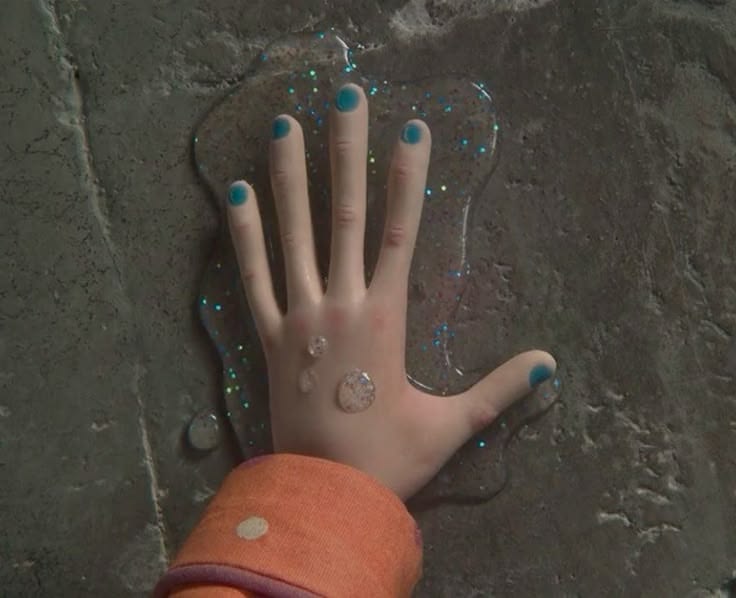
    Since I was three, my favorite film has always been Coraline. I watched it for the first time when my mother was in the hospital giving birth to my little sister. I somehow convinced the friend watching me that I had seen the film before, though it definitely wasn’t appropriate for a three-year-old. 

    I grew so fond of it that I made everyone around me watch it, and I continue to replay it to this day, over fifteen years later. My mom and I have had countless conversations on the true meaning behind the uncomfortable story. I easily understood the meaning or symbolism behind most movies, but for some reason, I couldn’t place my finger on Coraline

    My first thought was that it was simply a film to make kids grateful for their parents. I always felt an overwhelming sense of relief when her real parents returned to her in the end. It made me want to run into my mother’s arms and never let go, so I assumed that was the intent for every viewer. 

    Though the concept is so unique and fantastical, I didn’t dig deeper despite the obvious wonderland theme. The older I got, the more confusing the meaning became, and I decided to finally figure it out for myself. 

    The biggest symbolism throughout the story is abuse. Even if it’s hidden or shoved in our faces in certain scenes, I had to dissect the film even to realize it was there. The other mother uses very apparent manipulation tactics like lovebombing, luring, and empty promises. Essentially, grooming her with promises of things she would never receive, in order to get her away from her parents. 

    Although her real parents are lacking in many ways, they were never abusive. They often ignored Coraline while they worked all day and moved into their new house. These obstacles seem very understandable, but, seeing the world through an eleven-year-old’s eyes, we feel her lack of attention and disdain towards her parents. 

    Their lack of affection and love led her to throw herself completely into a new reality with the Other Mother. Leaving no ties to her actual life, because she didn’t feel like she was missing anything. A clear motion of escapism, but in the eyes of a child. 

    The Other Mother asks, “Would you like to stay here forever?” After only luring her for a few nights. Coraline agrees without hesitation, not a single thought for her parents or her life. After this moment, we start to see this “world” of hers crumble. Showing that everything isn’t perfect and it never will be. The bright colors start to dim, the wallpaper starts to peel, and each “other” character becomes more grotesque. 

    The term “other” is famously used throughout philosophy, particularly with Jacques Lacan. The idea of split counterparts or personas that reveal our true intentions. Coraline highlights this exact concept by using the literal name “other” for every character in this separate world. 

    The blatant signs of manipulation and taking advantage of her naivety were there from the beginning, but embedded so far beneath the fantasy plot that it’s hard to see. Once she returns from the Other Mother’s clutches, she finds herself feeling grateful for her own parents. The only real solution in this theory is Coraline learning to accept that she needs to grow up and be independent, not relying entirely on her parents. 

    This idea makes the most sense with my initial childhood take of being grateful, though there is one more peculiar theory.  

    Another take on the abuse plot could be switching between the personalities of the same person. Instead of a predator taking her from her parents, her mom and the Other Mother are the same figure. A more in-depth analysis using Lacan philosophy. Her mom represents the mundane and “normal” side of her family. The Other Mother represents the violent side, starting with love and lavish gifts, but ending in anger and yelling. Many kids deal with the violent mood swings from their parents—especially those with mental issues, like bipolar disorder. 

    In the scene with the ghost children, they describe the Other Mother as “feeding” on them, which is the same term to describe abusers who need people to feed on emotionally. 

    When looking deeper through this lens, we can see the exact back-and-forth between these two personas and the feeling of safety or unease in each scene. The father being scared or numb in both worlds can also give us insight into the overwhelming fear and abuse that he is witnessing or maybe even enduring. He cares for Coraline, but not enough to stand up to the Other Mother.  

    The Other Wybie is also an important piece of evidence for this claim. The Other Mother makes sure that he cannot speak, so that he can’t talk about the abuse he suffered at her hands. Abusive parents usually display a facade in public, or in front of others, very similar to this. 

    The main symbol throughout the film is buttons. They are everywhere, from dolls to sewn onto characters’ eyes. With this abuse theme in mind, the exchange between the other parents and Coraline turns into something much deeper and darker. The promise of eternal happiness in exchange for buttons sewn into her eyes can be seen as the abuse changing her permanently. Once she accepts their offer, there is no going back, and she will forever remain impacted by their influence. 

    For a children’s film, the mature yet very relevant concept of abuse makes it much more important for the message relayed to young viewers, even if it took me fifteen years to comprehend. 

  • Wuthering Heights

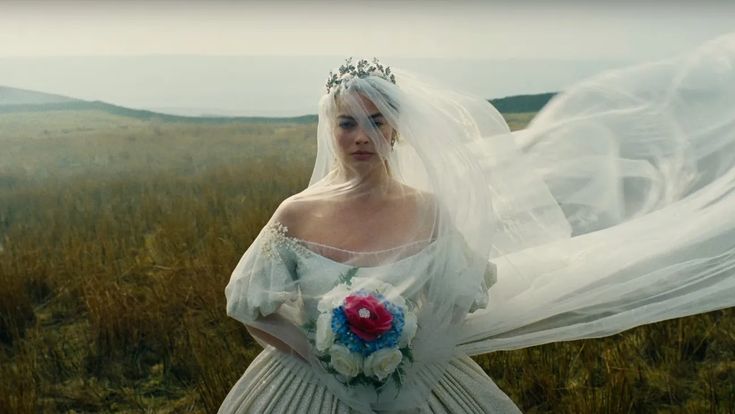
    I decided to spend my Valentine’s Day in the cinema with my roommate to watch the new Wuthering Heights film. I was obviously intrigued by the beauty of Margot Robbie and Jacob Elordi, but every scene was breathtaking. As someone who analyzes every frame, I was distracted by all of the striking colors and symbols throughout the film. There were countless intricate details that added more depth than I was expecting, but the one that struck me the most was the detail of human skin, in particular, their backs. We see both Cathy and Heathcliff grow up together, and the beatings he got from her father as they both matured. The transition between childhood and adulthood is seamless using the scars on his back as the progression of age. 

    After his first beating, we see Cathy carefully eyeing the lined blood stains through the back of his white, sheer shirt as it slowly fades into scars on the back of adult Heathcliff. The very intense zoomed-in shot shows every sweat bead and raised piece of skin. The film tends to focus on his back through different points of the story, and we finally see parallels on Cathy’s wedding day. Nelly is helping her into her wedding corset, and she proposes that they postpone the wedding. At this point, Heathcliff has been gone a year already, and Nelly tells her they cannot. She continues to tighten the corset and eventually goes to tie it when Cathy stops her, “Tighter.” Nelly tells her she won’t be able to breathe, and Cathy then repeats again, “Tighter.” The frame gets close enough to see the lines on her back from the already tight corset and the blood that is starting to stain the white fabric. This scene exactly parallels Heathcliff’s scars and the stomach-turning intricacy of human skin. It almost represents the grotesque closeness that both characters have with each other to the point of pain. Both characters look so bedazzling, but once the camera zooms in, we see every imperfection of sweat and blood. 

    Heathcliff got his scars from deciding to protect Cathy, while Cathy inflicted them upon herself. I think this detail can be very telling for both of their characters. Heathcliff is selfless throughout most of the plot, doing anything he can to benefit Cathy. Cathy is shown to be egotistical, selfish, and impulsive in most of her decisions. Her pain is inflicted upon her because of her own decisions, while Heathcliff’s pain is because of Cathy’s decisions. Though neither of them is completely innocent regarding their constant miscommunication, these parallels of self-inflicted pain and forced pain are amazing insights throughout the film. 

  • He’s Just Not That Into You

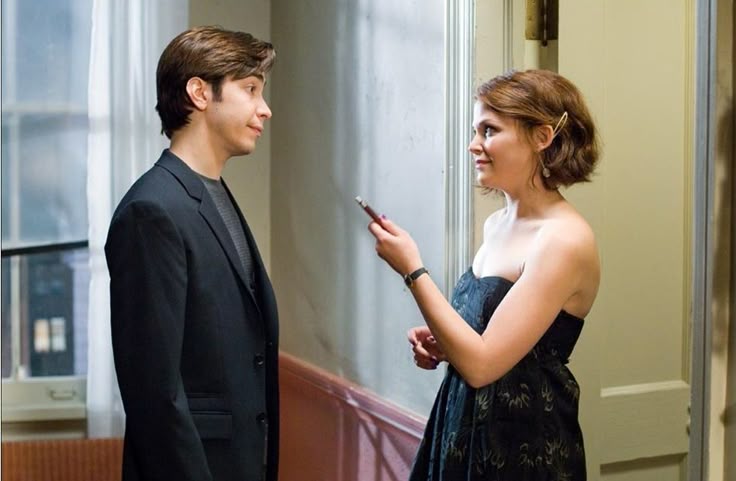
    As a woman, I think about this movie more often than I should. It was brought to my attention in one of my literary theory classes by my classmates, who were doing a presentation. Every woman in the room said that they show this movie to their friends and peers when they start to overthink their decisions regarding love. The opening scene of the movie depicts the close friendship that women have with one another, but also the disillusionment that we seem to pass on from generation to generation. 

    We see a little girl being bullied by a boy on the playground, and when she runs up to tell her mom, the only thing she says is “He’s doing that because he likes you.” This sentence brought me back to when I was young, and all the older women in my life told me the exact same thing. As much as it bothered me at first, I started to believe it. My friends were told similar fairytales, and they just seemed to evolve as we got older. 

    “He’s not calling because he thinks you’re too good for him.”

    “You’re just too mature for him right now.”

    “He’s intimidated by your beauty.”

    “He probably lost your number.”

    And so on and so forth. No matter what age I am, I hear these types of comments meant to make us feel better, but instead, they’re leading us to think that this is how women are meant to be treated. We allow ourselves to be continuously strung along and treated like shit, because that’s how all the women around us were treated. He doesn’t call when he says he will, or he’s not listening to you on your date because he’s had a rough day. But maybe the truth of the matter is that he’s just not that into you. 

    I have found myself repeating these very phrases to my friends, and It wasn’t until watching this film that I realized the mediocrity of it all. We’ve accepted that maybe women are much more complex and compassionate creatures, but in doing so, we’ve given men countless excuses for treating us subhuman. Many women have found solace in confiding in their friends, but we might be doing more harm than good in the long run. Many of these women end up settling for someone who isn’t enough, but they accept it because of the countless excuses given by their friends. This continuous cycle of delusion has only gotten worse with the age of social media, and now we have new terms and new phrases to feed to each other. 

    “His phone probably died.”

    “He didn’t mean to leave you on opened.”

    “He liked your Instagram story, that means he likes you.” 

    As I get older, it gets harder and harder to bear hearing these phrases, even though I know my friends and family are only trying to make me feel better. I still have to correct myself, but I’ve learned to say;

    “He just isn’t the one; you’ll find someone better.”

    “I would just block him; he isn’t worth your time.” 

    We feel a type of anxious excitement that comes with waiting by the phone, and we always assume that it’s that “spark” that makes us so excited to hear back from them, but it’s really the fear that they won’t call back instead of the joy we feel while actually talking to them. This term the “spark” has also given men more outs for being horrible partners as well as people. If we had friends who didn’t give us the time of day and never called back when they said they would, we would consider them bad friends. Why should relationships be any different? 

    My most valued expression as of late is “An extraordinary man is just an average woman.” This perfectly sums up the experience that the women in my life have experienced. We meet women who would give the world to you if they could, while a man who’s supposed to be your partner for life can’t even call you back or look into your eyes when you’re speaking.

    A very wise family member of mine always asks the same question when I tell her of my recent endeavors: “Is he fun or am I fun and he’s just there?” We see overly romanticized movies daily and assume that everything will just fall into place if you find a guy who checks all your boxes. But the truth is, when all is said and done, do you really enjoy being with him that much? Is it as fun as you imagined it to be?

    Though I would love to continue being a hopeless romantic, I’ve learned that real life doesn’t work that way. You aren’t the exception, but neither is he. 

  • Eternity

    Most of my writing is usually inspired by new films in theaters or pieces of literature that inspired them. My most recent fixation is the new romance movie Eternity. Over the holidays, I haven’t had much to work with, but for some reason, this saddening film struck a chord with me. It follows a couple who have both recently passed away and are stuck between life and death, deciding where they should spend eternity. The husband, Larry, passes away first and is determined to wait for his wife, Joan, whom he has been married to for sixty-five years. Joan arrives only a week later, after dying from cancer, and is shocked to find herself reunited with her first husband, who died in battle. It’s an amusing premise, but as the story unfolds, it becomes increasingly complex. Joan has to decide who she wants to spend the rest of eternity with. While she’s been married to one for sixty-five years, she never got to have a life with the other. 

    As the movie progressed, I started to adore Joan more and more. Her thought process is very realistic to what I would have done myself in her situation, and towards the middle, she chooses herself. She doesn’t want to pick one or the other, so she picks neither. I honestly felt this was the best option for Joan, even though it wasn’t the direction the film was going in. The director uses the trope of first love versus last love. First love is exciting and passionate, but simple and often short-lived. While her last love had hardship and a presumed sedentary lifestyle, it had comfort and peace. Joan figures out by the end, after picking an eternity with Luke, her first husband, that although she was happiest with him, life has so much more to offer. The smallest things, like bickering in the car, raising children, and reminding each other to take medication, can be the things that make life so rewarding. Joan finally realizes the mistake of picking her young love and goes back to find Larry amidst the chaos. The couple finally reunites to find themselves in an abandoned eternity, away from everyone else, and decide to spend their eternity there. 

    People my age seem to have a fascination with the idea of first love. Countless people I’ve met seem unsettled by the idea that whoever they are with will never love them as much as they did their first love. This is usually targeted towards male audiences, and the notion that they never truly get over it. It’s a heartbreaking thought that so many in relationships choose to focus on, but this film eased my mind. Audiences assume that she will end with her first love by the way the movie is portrayed, as well as our preconceived notions of the beauty of a first love. First love doesn’t have to be everything we think it is. We can see that the hardship and countless years of shared time brought them closer together than she and Luke ever were. 

    Joan’s most important line in the film is when she finally has the courage to tell Luke that she made a mistake; “It was young love, it was everything. But love isn’t just one happy moment, right? It’s a million.” By this point, my eyes were filled with tears by this simple conversation between them. Even though this film has a very fictional plot, the characters and dialogue felt so unbelievably real. With one sentence, everything else clicked into place after so much uncertainty. 

    Although young love is full of fun and excitement, spending a lifetime together and learning to overcome hardship is that much stronger. Each character that is depicted in the film is so complex and interesting that we end up rooting for all of them at once. Alongside the first love versus last love, we also have the overwhelming concept of time. Time is brought up again and again as a way to justify their actions or decisions. Joan thinks she should stay with Larry because they have been married sixty-five years, but she should go with Luke because he’s been waiting sixty-seven years. We go back and forth between these options until the answer becomes entirely unclear. This almost feels like a nod to real life; time isn’t the reason we fall in love or stay in love. Sometimes things just aren’t meant to be, and we can’t force them to be. Love is supposed to be and always is complex, and the answer isn’t always clear.

  • Caught in the Web

    The metaphorical meaning behind spiderwebs has been explored in literature for thousands of years, dating back to the 6th century BCE, when it was often used in Greek philosophy to convey fragility and political discourse. Spiderwebs or cobwebs can be seen as intricate, fragile, yet dangerous and trapping at the same time. Spiders place bait to catch their prey, leading them to their demise. They are also similar to snowflakes; the designs have radical symmetry and no two webs are the same. They are beautiful yet eerie in their purpose. We don’t often see hunting as something that is breathtaking. We wince every time we see gazelles being torn apart by lions on nature channels. Why is it that spiders get away from this conception? 

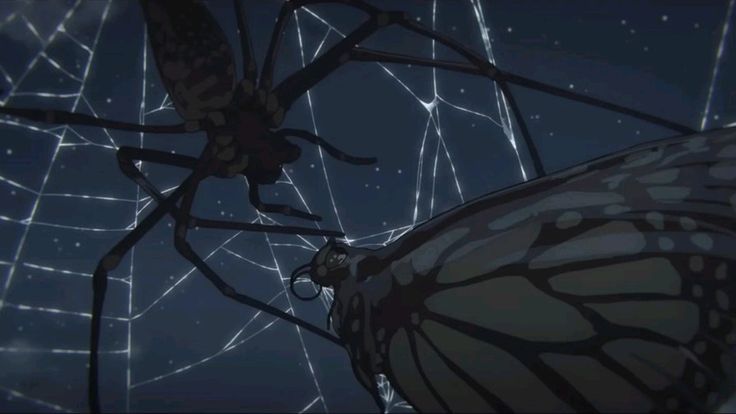
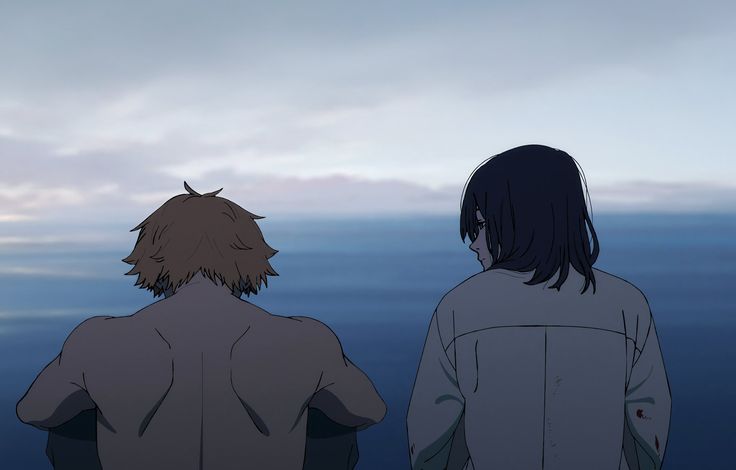
    The new ‘Chainsaw Man’ movie that recently aired this month briefly touches on this concept. The film is supposed to mess with our preconceived notions of fear and beauty. One of the most influential moments of the film is when the two main characters are teaching each other how to swim. While we watch this seemingly sweet and innocent action, we are clearly able to see the progression of a spider spinning its web. As the moment becomes more sinister and we feel a sense of dread as onlookers, we see a moth caught in the web, covered in drops of water above the pool. Once the scene ends, the spider is seen devouring the moth tangled in the web. This represents the ending of their childhood or innocence. They are both swimming without clothes on, but the scene is depicted in such a light and hopeful manner that it seems completely natural and childlike. The story depicts exactly this progression. 

    The story deeply explores the loss of innocence and how the characters seem much older than they are. We never realize this fact as watchers until they return to a school-like setting, and we realize that normal kids their age should be in classrooms. While the film explores innocence, it also carefully suggests that this is the product of raising children as weapons and state-directed violence. Although watchers are heavily targeted towards the main character, by the end of the film, we can see the battle between good and evil and the manipulation of both young characters. They were both used as assets by two different sides and never got to experience a real childhood. They never had a chance at real life. The spiderweb is the perfect analogy for what both characters experience. The web is the system that controls them, and the spider is the character who consumes the other, leaving them both with nothing. 

  • Country Mouse or City Mouse? 

    One of Aesop’s most famous fables is the question of Would you rather be a city mouse or a country mouse. The country mouse lives simply, eating only basic things, and doesn’t have much to do on the wide-open farmland, but it’s a safe place for a mouse to live peacefully. While the city mouse lives with much more extravagant food options and a whole city to explore, but risks its life every day running into humans and cats. Many would argue that the city mouse has it better, but in the original fable, the country mouse admits by the end of his visit to the city that he would rather have safety and security while eating rather than always being in a constant state of peril. How can you enjoy the taste of your food if you are in fear?

    The new ‘Chainsaw Man’ movie uses this example throughout the film as a conversation topic between characters. It seems like a very straightforward question, but the closer you look, the more you see the plotline following the exact story of the fable. ‘Chainsaw Man’ uses countless real world problems of government control, insecurity, and childhood trauma throughout its narrative. Instead of one antagonist to despise for all the pain caused in the story, there are countless uncontrollable factors. This is purposely done to make watchers feel a sense of uncontrol and hopelessness, similar to how the characters feel in their lives. 

    The story follows a young boy named Denji, who is around the age of sixteen. He was taken in by public safety from his horrible life of trying to pay off debt left by his deadbeat father, by the yakuza or mafia. He did so by killing devils for them, because of this he never went to school and never had a real life of his own. He is found useful by the government because he is now considered part devil and part human. We watch his character experience everyday things that we all take for granted, like bathing, eating breakfast, and talking to people his age. But this new life of his has come at a cost. As the film progresses, we start to see the instability in his new life; he is in even more danger than before and is being used as a pawn by the government. No matter where we are in the story, Denji is being used by some kind of authority. 

    The second character we see throughout the film is Reze, a young girl similar in age to Denji. They met randomly one day while trying to escape the rain in a telephone booth. He is oddly attracted to her, and she helps him discover more aspects of life he’s never experienced before. Such as going to school and learning how to swim. Although they are small acts, they are huge portions of the film because they are so foreign to Denji. Reze ends up being a different character than we expect. She’s actually a devil similar to Denji and was using him in order to steal his heart. This also has symbolic meaning after their time together. After this reveal in the film, we see Denji fall more into a state of distrust and deception from others. He often questions if she ever really cared for him and if everything was a lie. The story ends with Reze being defeated by Denji dragging her to the bottom of the ocean but she calmly walks away once Denji saves her from drowning. Even though he was being used by her, he still wanted to be with her in the end. He tells her to meet him at the cafe they always went to before she fades into the distance. 

    The last scene in the film is the most important for the message conveyed in the narrative. We see Reze running down the familiar alleyway in order to see if Denji is waiting for her at the cafe, like he said he would. We see Denji sitting in his usual spot with a bouquet of flowers waiting for her like nothing had happened between them. As Reze runs down this corridor and spots him, we finally get to see her tough persona crumble. It’s revealed that she never had a life or attended school either. As much as watchers believed that she was deceiving him up until that point, we can also make the argument that she was just following orders, similar to the uncontrollable factors that control Denji. They were both child soldiers and were being exploited by the government. As she is about to enter the sunlight from the alley, she is stopped by Makima, Denji’s main authority figure, and she is brutally slaughtered without a second thought. We see Reze staring at the back of Denji’s head through the windows of the cafe she can’t reach. She never reaches the light ahead of her, signifying that she forever stayed in the darkness, while Denji believed he had been abandoned. 

    Towards the middle of the film, Aesop’s fable is discussed by two different characters. It sounds funny and light-hearted at first, but it slowly becomes more sinister. Reze questions Denji with this fable, and Denji responds without hesitation that he would rather be the city mouse. He wants delicious food and more things to do in his days. This reveals a big part of his psyche to the audience. In a way, Denji is aware of his situation in life, but would rather be in danger while living life to the fullest instead of a useless, unenjoyable existence. Before Makima takes Reze’s life, she depicts how she enjoys going to the countryside in the summer and killing the mice that ravage the crops. The choice both Denji and Reze had contemplated was completely useless. Makima makes this statement as a way to assure them that no matter if they were both city or country mice, she would always control them. Similar to the power of the government in real life, no matter where you go, you can never escape control.