Welcome to Éire Literature! I’m using this page to share my personal works while I’m in college and have the time to write freely. Hope you enjoy!

Tag: horror

  • Man or Bear?

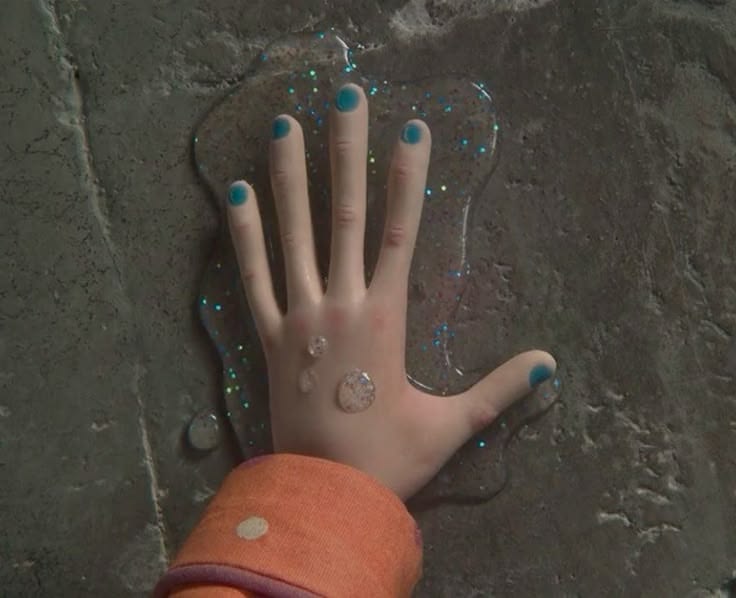
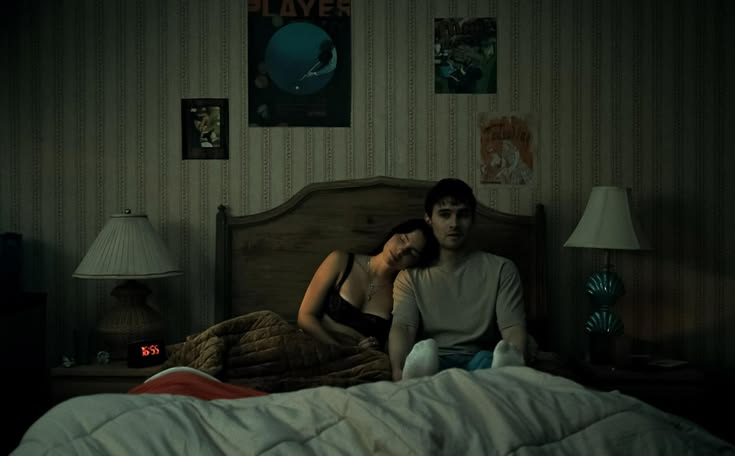
    The new horror film Obsession has been a wild success since its release this May. The story follows Barron, or Bear, as he’s called by his friends. A young man working at a music supply shop with his co-workers who are also his close friends. We begin to see his obvious crush on one of the girls, Nikki, and his mental deliberation over whether to confess his feelings. After discussing his feelings with one of his co-workers, Ian, he returns home to find his cat dead on the floor, having gotten into his pills that were near his food bowl. The scene is eerie, and the way he handles his grief is noticeably unsettling. 

    After cleaning up the body, he gets a call from Nikki asking him to come to their weekly trivia night. He feels conflicted, but she then informs him that she has something important to tell him. The scene hints like a confession, but instead she tells him she will be quitting her job at the store to become a writer, that the time they have to hang out is limited. Bear quickly decides to go out anyway, even after grieving his cat. The script hints at his tears being due to his unrequited love versus the supposed loss of his pet. 

    Nikki drops her crystal necklace down the bathroom sink towards the end of their call, he decides to find the closest crystal shop rushing to get her a new one. He can’t find one that fits her tastes, so he decides to buy her a kitschy gift instead. He spots a small box labeled “One Wish Willow.” The box says that it can grant one wish when you snap the willow branch in half. After a confusing conversation with the cashier about the purchase, he heads to the bar for trivia night. 

    He doesn’t immediately tell his friends about his cat, much to the discomfort of watchers. Bear, oddly, tells one of his friends, Sarah, who offers her condolences, though he continues to pretend everything is normal. After attempting to talk to Nikki all night, he offers to drop her home, and that he has a gift for her. Nikki has a peculiar reaction to his comment, leaving Bear more hesitant than before. They arrive at her house, and Bear attempts multiple times to confess, but the timing just doesn’t add up. As she walks away, he makes the mistake of teasing her, calling her “freaky Nikki,” a sensitive nickname from high school. Nikki becomes enraged and can feel the unnatural tone of the conversation, so she finally questions whether Bear likes her. To which Bear replies that they are “good friends,” completely dismissing his ambitions. 

    Nikki goes into her house, and Bear is left to wallow with his thoughts. 

    Out of hopelessness, he opens the One Wish Willow he bought for Nikki, snapping the branch and reciting his spontaneous wish, “I wish Nikki Freeman loved me more than anyone else in the world.” 

    The entire mood of the film shifts within a second, and Nikki reappears on her porch this time engulfed in darkness. She saunters back to the car window with a different tone of voice, asking Bear if he wants to come inside, because she just “lost her cat.” 

    Bear, confused by her comment and erratic behavior, says it was his cat, not hers. Nikki furrows her brows and slowly says, “Oh, right.” 

    Almost as if she couldn’t remember. She pushes multiple times to get him into her house before getting back into his car in tears. She tells Bear that her dad is sick and that she can’t handle being alone. He gives in and takes her back to his house. Her behavior and way of speaking were suddenly meek and less confident. She becomes overwhelmingly clingy and affectionate, which leads to them kissing in his bed, much to Bear’s surprise. She suddenly jolts back and scrambles off the bed, terrifying Bear with her reaction. Her face returns to a slight smile as she crawls back into the bed, saying she didn’t mean it. 

    The story quickly progresses as Nikki and Bear start dating, much to their co-workers’ shock. Bear explains her odd behavior to Ian, but quickly pretends it didn’t happen once they start dating. Nikki becomes less and less like herself and more aggressive in her attempts to keep Bear by her side. He’s so wrapped up in their “relationship” that he ignores and hides her disturbing behavior. From duck taping the front door, to feeding him cat meat in his packed lunch alongside a photo labeled “You & Not Me.” 

    These horrific actions are small blips of the real Nikki trying to communicate with Bear. She repeatedly brings his cat back into the plot as a way of reminding him of loss, the way Nikki lost herself. As well as the subtle symbolism of “curiosity killed the cat.” She had no other reference on how to love Bear besides the love he had for his cat, so she tried her best to mimic it. 

    She becomes more erratic, having outbursts at night and screaming before going back to “normal.” Their friends start to become concerned about the nature of their relationship. Bear attempts to go to a boy’s night at Ian’s without Nikki, but can’t manage to leave the house without her. The group starts to go around the room playing a drinking game. Once it lands on Nikki, she stands up with no explanation and recites a paragraph from her new writing piece, while looking into Bear’s eyes. The story sounds like Hanzel and Gretel, but quickly morphs into a sexually disturbing piece about sibling incest. 

    Nikki reads it aloud like a love story, ending it with, “A love only a willow branch could conjure.” Bear is now faced with the fact that Nikki isn’t really in love with him; it’s all forced because of his selfish wish. The real Nikki is still there, witnessing it all.  

    This intricate detail that slips through indicates that Nikki thought of Bear like a brother. That, without the One Wish Willow, she never would have loved him. 

    Even after her mental breakdowns, Bear continues to pretend like they have a great relationship. The disturbing sex scenes that happen towards the end of the film are clear symbols of sexual assault. He’s aware that Nikki isn’t herself and doesn’t truly want to be with him, but he continues to sleep with her anyway. All we can see during this moment is Nikki’s blank stare as her mouth tries to replicate human moans. It’s a belittling moment for our view of Bear. 

    Nikki once again has an outburst where her romantic persona fades, and she stabs herself in the forehead with a piece of glass. These breaks are the real side of Nikki, trying to alert Bear and the others around her that this submissive figure isn’t her. 

    As each scene gets more grotesque and skewed, Nikki becomes more intense and violent. The persona of “Nikki” begins to realize that no matter what she does or how erratic she becomes, Bear will still want to be with her, making it much easier for her to fulfill his wish. 

    Bear tries to take Nikki to the hospital, but she refuses, and he finally decides to call the number on the box. A man answers the phone and asks, “Do you want to cancel your wish?” This is a way of asking Bear if he’s learned his lesson. Instead of immediately canceling it, he questions if he can alter his wish. This is where we really start to see the selfish side of Bear: even after all the pain he has caused, he still wants to be with her. Even after acknowledging that Nikki doesn’t want to be with him. The man on the other end of the line asks if he wants to talk to Nikki. Bear questions what he means, and the man puts the real Nikki on the phone. All we can hear are blood-curdling screams of captivity. 

    The story starts to reach the end with Nikki killing their co-worker, Sarah, smashing her face with a brick when she finds Bear in the car with her late at night. Bear tries to find a way to get rid of his wish without killing himself or Nikki, so he turns to Ian. Panicked, he begged Ian to make a wish contradicting his, but can’t get him to believe the wish is real. Ian uses his wish on money, leaving Bear to deal with his own problems. He comes home to find Nikki covered in blood with Sarah’s corpse in the dining room. After closer examination, we can see that Nikki has Sarah’s tattoos drawn on her with a permanent marker and is wearing Sarah’s hair, thinking that it would make Bear love her more. Similar to her way of replicating the behavior of Bear’s cat, she changes her focus to Sarah in order to gain his affection. 

    He locks himself in the bathroom after all of his attempts prove futile. Once he’s sitting on the floor, he spots the meds that originally killed his cat in the cabinet and swallows them. Nikki, who’s still pounding on the door, is screaming at him to come out, before we hear her step away from the door. The familiar chime of the One Wish Willow plays, and with a snap, Bear is back on his feet, trying to find Nikki in a trance. 

    “Nikki” used the One Wish Willow to make Bear love her more than anyone in the world. The exact same, controlling and all consuming wish that placed her in that situation. The scene of the couple being blissfully in love lasts about nineteen seconds before Bear is convulsing and dead on the floor. In the last scene, we see Nikki screaming in absolute terror before falling back on the couch and snapping out of her trance. Her eyes widened in horror at the corpses and blood around her, unaware of how it all happened. We hear her screech at Bear, “What did you do!” 

    After watching the film, I started to question whether naming his character “Bear” was purposeful. Seeing his actions disguised as love, I thought of the famous question “Man or Bear.” Women on social media often debate whether they would rather be stuck in the woods with a man or a bear. Most women choose the bear, because with a bear, the only fear is death. If you were killed by a bear, no one would ask what you were wearing or try to defend the bear. The underlying meaning of Bear’s name, as well as his wish, reveals his true intentions and misogyny from the start. 

    Bear’s true nature is displayed from the very beginning when he uses the gift he got for Nikki, wishing for fabrication instead of truth. The One Wish Willow wasn’t the thing that was cursed; it was his wish. He wanted her as an accessory with no autonomy, not the real Nikki. The real obsession was his unnatural infatuation with Nikki, not the obsession that he forced upon her. 

  • Silent Hill F

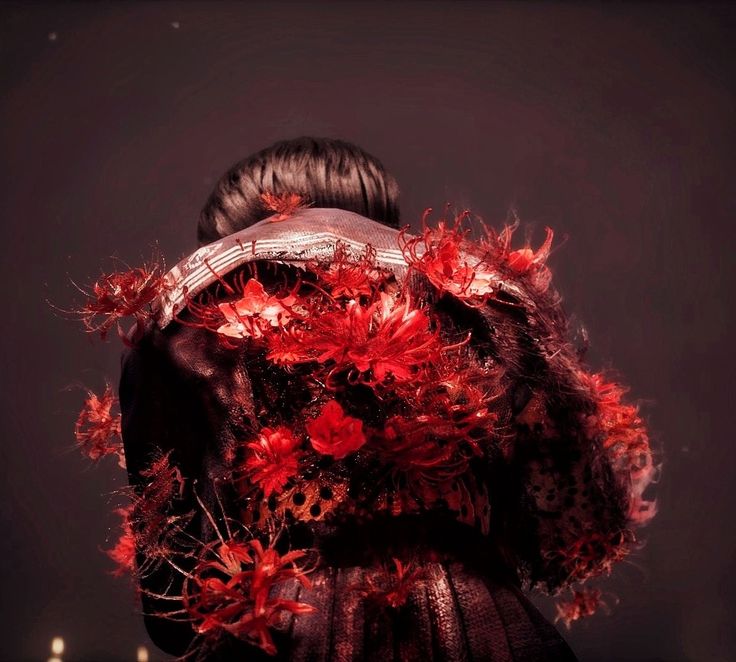
    I recently completed Silent Hill F, a new addition to the very popular game franchise. I wasn’t expecting such an intense and heartwrenching story alongside the incredible fight scenes and confusing dynamics. The story follows Hinako, a young school girl in a small town in fifties Japan. Her family consists of her parents and her older sister, Junko, who recently got married and moved out. Junko is a mysterious figure throughout the game. We never see her face or learn what truly happened to her, but it’s all jumbled in her mind. Everything is depicted through Hinako’s eyes, whether we choose to believe it’s truly happening or not. Hinako is accompanied through parts of the game by her two friends, one of them being Shu. A childhood friend, who very obviously has romantic feelings for her. Though it’s so clear to see, Hinako blatantly ignores it and acts as friendly as she can muster. As the story progresses, we see more context behind Hinako’s behavior. After witnessing her older sister’s betrothal, she’s utterly terrified of marriage and the possibility of turning into her mother. Her mother obeys her father without question and has to submit herself to him entirely. Both her mother’s and her sister’s experiences in marriage made Hinako ultimately make up her mind to avoid marriage at all cost. 

    We witness her battle multiple distorted figures throughout the story, each one pertaining to her phobia of marriage. They resemble grotesque brides channeling her fears into physical entities. Like lots of stories about women, it ends once they are married. She fights so hard in order to prevent the end of her story over and over again, as each event gets more violent. Shu continues to stay by her side, as she fights her inner self who wants to submit and let herself belong to him. We play as two different versions of her, the “real” Hinako and the one within her head. The Hinako that is in her head fights enemies and goes through countless marriage rituals as she gets closer and closer to the altar. The “real” Hinako fights continuously  to escape the pressure of parents, friends, and her older sister, to give in and let it happen. As her mind gets more twisted and her actions become less real, she gradually starts to lose her sanity completely. 

    Depending on who is playing, Hinako can give in to her imaginary groom and the idea of a suffocating marriage, or she can leave the altar with Shu, ultimately to be married off to him instead. One of the last options is seeing the aftermath in the real world, where she loses all grip on reality and kills people at her arranged wedding, running away to be on her own. Other options are just as confusing as everything else in the game; some have both Hinakos, some only have one, and mostly depict a pretend world. I received the murder ending. Although I wouldn’t say it’s the happiest, I’m relieved I got that outcome versus the ending with one of her two “love interests.” After all she endured, I think it’s a disservice to allow her to end with an outcome she so desperately wished to escape. It could be chopped up to accept the inevitable, that it’s not as scary as she imagined, but I think it diminishes the meaning behind the story. For a girl stuck in such a trapping situation, she fights diligently to give herself the freedom that she and all women deserve. 

  • Country Mouse or City Mouse? 

    One of Aesop’s most famous fables is the question of Would you rather be a city mouse or a country mouse. The country mouse lives simply, eating only basic things, and doesn’t have much to do on the wide-open farmland, but it’s a safe place for a mouse to live peacefully. While the city mouse lives with much more extravagant food options and a whole city to explore, but risks its life every day running into humans and cats. Many would argue that the city mouse has it better, but in the original fable, the country mouse admits by the end of his visit to the city that he would rather have safety and security while eating rather than always being in a constant state of peril. How can you enjoy the taste of your food if you are in fear?

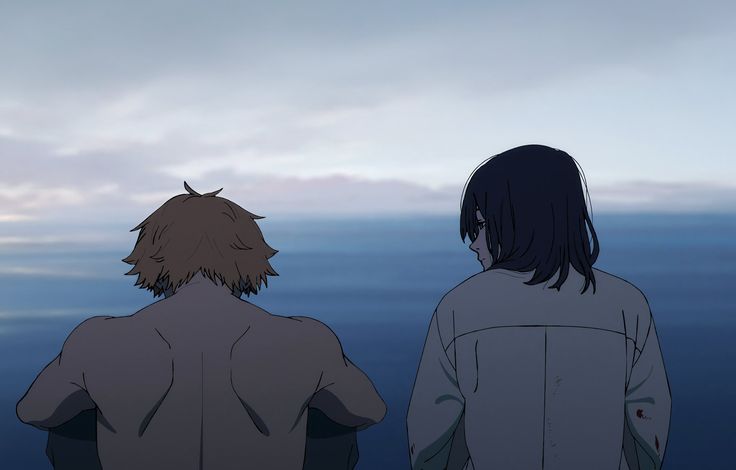
    The new ‘Chainsaw Man’ movie uses this example throughout the film as a conversation topic between characters. It seems like a very straightforward question, but the closer you look, the more you see the plotline following the exact story of the fable. ‘Chainsaw Man’ uses countless real world problems of government control, insecurity, and childhood trauma throughout its narrative. Instead of one antagonist to despise for all the pain caused in the story, there are countless uncontrollable factors. This is purposely done to make watchers feel a sense of uncontrol and hopelessness, similar to how the characters feel in their lives. 

    The story follows a young boy named Denji, who is around the age of sixteen. He was taken in by public safety from his horrible life of trying to pay off debt left by his deadbeat father, by the yakuza or mafia. He did so by killing devils for them, because of this he never went to school and never had a real life of his own. He is found useful by the government because he is now considered part devil and part human. We watch his character experience everyday things that we all take for granted, like bathing, eating breakfast, and talking to people his age. But this new life of his has come at a cost. As the film progresses, we start to see the instability in his new life; he is in even more danger than before and is being used as a pawn by the government. No matter where we are in the story, Denji is being used by some kind of authority. 

    The second character we see throughout the film is Reze, a young girl similar in age to Denji. They met randomly one day while trying to escape the rain in a telephone booth. He is oddly attracted to her, and she helps him discover more aspects of life he’s never experienced before. Such as going to school and learning how to swim. Although they are small acts, they are huge portions of the film because they are so foreign to Denji. Reze ends up being a different character than we expect. She’s actually a devil similar to Denji and was using him in order to steal his heart. This also has symbolic meaning after their time together. After this reveal in the film, we see Denji fall more into a state of distrust and deception from others. He often questions if she ever really cared for him and if everything was a lie. The story ends with Reze being defeated by Denji dragging her to the bottom of the ocean but she calmly walks away once Denji saves her from drowning. Even though he was being used by her, he still wanted to be with her in the end. He tells her to meet him at the cafe they always went to before she fades into the distance. 

    The last scene in the film is the most important for the message conveyed in the narrative. We see Reze running down the familiar alleyway in order to see if Denji is waiting for her at the cafe, like he said he would. We see Denji sitting in his usual spot with a bouquet of flowers waiting for her like nothing had happened between them. As Reze runs down this corridor and spots him, we finally get to see her tough persona crumble. It’s revealed that she never had a life or attended school either. As much as watchers believed that she was deceiving him up until that point, we can also make the argument that she was just following orders, similar to the uncontrollable factors that control Denji. They were both child soldiers and were being exploited by the government. As she is about to enter the sunlight from the alley, she is stopped by Makima, Denji’s main authority figure, and she is brutally slaughtered without a second thought. We see Reze staring at the back of Denji’s head through the windows of the cafe she can’t reach. She never reaches the light ahead of her, signifying that she forever stayed in the darkness, while Denji believed he had been abandoned. 

    Towards the middle of the film, Aesop’s fable is discussed by two different characters. It sounds funny and light-hearted at first, but it slowly becomes more sinister. Reze questions Denji with this fable, and Denji responds without hesitation that he would rather be the city mouse. He wants delicious food and more things to do in his days. This reveals a big part of his psyche to the audience. In a way, Denji is aware of his situation in life, but would rather be in danger while living life to the fullest instead of a useless, unenjoyable existence. Before Makima takes Reze’s life, she depicts how she enjoys going to the countryside in the summer and killing the mice that ravage the crops. The choice both Denji and Reze had contemplated was completely useless. Makima makes this statement as a way to assure them that no matter if they were both city or country mice, she would always control them. Similar to the power of the government in real life, no matter where you go, you can never escape control.