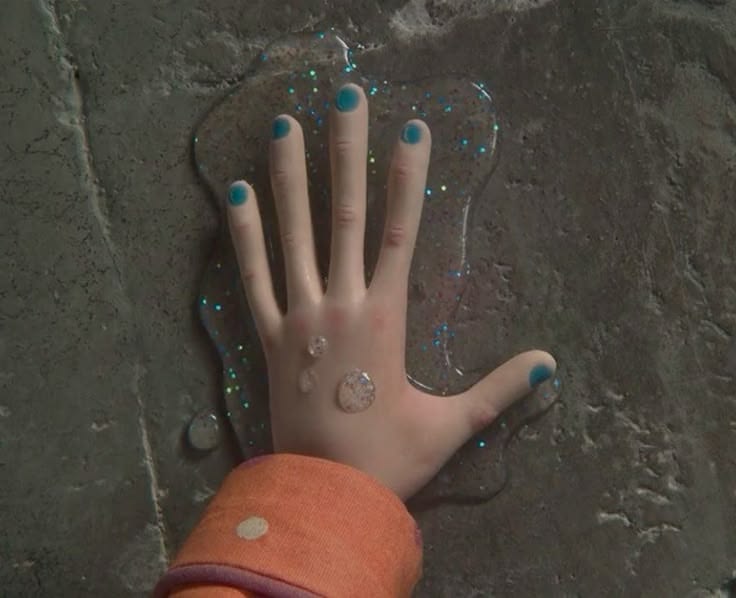
Since I was three, my favorite film has always been Coraline. I watched it for the first time when my mother was in the hospital giving birth to my little sister. I somehow convinced the friend watching me that I had seen the film before, though it definitely wasn’t appropriate for a three-year-old.
I grew so fond of it that I made everyone around me watch it, and I continue to replay it to this day, over fifteen years later. My mom and I have had countless conversations on the true meaning behind the uncomfortable story. I easily understood the meaning or symbolism behind most movies, but for some reason, I couldn’t place my finger on Coraline.
My first thought was that it was simply a film to make kids grateful for their parents. I always felt an overwhelming sense of relief when her real parents returned to her in the end. It made me want to run into my mother’s arms and never let go, so I assumed that was the intent for every viewer.
Though the concept is so unique and fantastical, I didn’t dig deeper despite the obvious wonderland theme. The older I got, the more confusing the meaning became, and I decided to finally figure it out for myself.
The biggest symbolism throughout the story is abuse. Even if it’s hidden or shoved in our faces in certain scenes, I had to dissect the film even to realize it was there. The other mother uses very apparent manipulation tactics like lovebombing, luring, and empty promises. Essentially, grooming her with promises of things she would never receive, in order to get her away from her parents.
Although her real parents are lacking in many ways, they were never abusive. They often ignored Coraline while they worked all day and moved into their new house. These obstacles seem very understandable, but, seeing the world through an eleven-year-old’s eyes, we feel her lack of attention and disdain towards her parents.
Their lack of affection and love led her to throw herself completely into a new reality with the Other Mother. Leaving no ties to her actual life, because she didn’t feel like she was missing anything. A clear motion of escapism, but in the eyes of a child.
The Other Mother asks, “Would you like to stay here forever?” After only luring her for a few nights. Coraline agrees without hesitation, not a single thought for her parents or her life. After this moment, we start to see this “world” of hers crumble. Showing that everything isn’t perfect and it never will be. The bright colors start to dim, the wallpaper starts to peel, and each “other” character becomes more grotesque.
The term “other” is famously used throughout philosophy, particularly with Jacques Lacan. The idea of split counterparts or personas that reveal our true intentions. Coraline highlights this exact concept by using the literal name “other” for every character in this separate world.
The blatant signs of manipulation and taking advantage of her naivety were there from the beginning, but embedded so far beneath the fantasy plot that it’s hard to see. Once she returns from the Other Mother’s clutches, she finds herself feeling grateful for her own parents. The only real solution in this theory is Coraline learning to accept that she needs to grow up and be independent, not relying entirely on her parents.
This idea makes the most sense with my initial childhood take of being grateful, though there is one more peculiar theory.
Another take on the abuse plot could be switching between the personalities of the same person. Instead of a predator taking her from her parents, her mom and the Other Mother are the same figure. A more in-depth analysis using Lacan philosophy. Her mom represents the mundane and “normal” side of her family. The Other Mother represents the violent side, starting with love and lavish gifts, but ending in anger and yelling. Many kids deal with the violent mood swings from their parents—especially those with mental issues, like bipolar disorder.
In the scene with the ghost children, they describe the Other Mother as “feeding” on them, which is the same term to describe abusers who need people to feed on emotionally.
When looking deeper through this lens, we can see the exact back-and-forth between these two personas and the feeling of safety or unease in each scene. The father being scared or numb in both worlds can also give us insight into the overwhelming fear and abuse that he is witnessing or maybe even enduring. He cares for Coraline, but not enough to stand up to the Other Mother.
The Other Wybie is also an important piece of evidence for this claim. The Other Mother makes sure that he cannot speak, so that he can’t talk about the abuse he suffered at her hands. Abusive parents usually display a facade in public, or in front of others, very similar to this.
The main symbol throughout the film is buttons. They are everywhere, from dolls to sewn onto characters’ eyes. With this abuse theme in mind, the exchange between the other parents and Coraline turns into something much deeper and darker. The promise of eternal happiness in exchange for buttons sewn into her eyes can be seen as the abuse changing her permanently. Once she accepts their offer, there is no going back, and she will forever remain impacted by their influence.
For a children’s film, the mature yet very relevant concept of abuse makes it much more important for the message relayed to young viewers, even if it took me fifteen years to comprehend.