Welcome to Éire Literature! I’m using this page to share my personal works while I’m in college and have the time to write freely. Hope you enjoy!

Tag: love

  • Man or Bear?

    The new horror film Obsession has been a wild success since its release this May. The story follows Barron, or Bear, as he’s called by his friends. A young man working at a music supply shop with his co-workers who are also his close friends. We begin to see his obvious crush on one of the girls, Nikki, and his mental deliberation over whether to confess his feelings. After discussing his feelings with one of his co-workers, Ian, he returns home to find his cat dead on the floor, having gotten into his pills that were near his food bowl. The scene is eerie, and the way he handles his grief is noticeably unsettling. 

    After cleaning up the body, he gets a call from Nikki asking him to come to their weekly trivia night. He feels conflicted, but she then informs him that she has something important to tell him. The scene hints like a confession, but instead she tells him she will be quitting her job at the store to become a writer, that the time they have to hang out is limited. Bear quickly decides to go out anyway, even after grieving his cat. The script hints at his tears being due to his unrequited love versus the supposed loss of his pet. 

    Nikki drops her crystal necklace down the bathroom sink towards the end of their call, he decides to find the closest crystal shop rushing to get her a new one. He can’t find one that fits her tastes, so he decides to buy her a kitschy gift instead. He spots a small box labeled “One Wish Willow.” The box says that it can grant one wish when you snap the willow branch in half. After a confusing conversation with the cashier about the purchase, he heads to the bar for trivia night. 

    He doesn’t immediately tell his friends about his cat, much to the discomfort of watchers. Bear, oddly, tells one of his friends, Sarah, who offers her condolences, though he continues to pretend everything is normal. After attempting to talk to Nikki all night, he offers to drop her home, and that he has a gift for her. Nikki has a peculiar reaction to his comment, leaving Bear more hesitant than before. They arrive at her house, and Bear attempts multiple times to confess, but the timing just doesn’t add up. As she walks away, he makes the mistake of teasing her, calling her “freaky Nikki,” a sensitive nickname from high school. Nikki becomes enraged and can feel the unnatural tone of the conversation, so she finally questions whether Bear likes her. To which Bear replies that they are “good friends,” completely dismissing his ambitions. 

    Nikki goes into her house, and Bear is left to wallow with his thoughts. 

    Out of hopelessness, he opens the One Wish Willow he bought for Nikki, snapping the branch and reciting his spontaneous wish, “I wish Nikki Freeman loved me more than anyone else in the world.” 

    The entire mood of the film shifts within a second, and Nikki reappears on her porch this time engulfed in darkness. She saunters back to the car window with a different tone of voice, asking Bear if he wants to come inside, because she just “lost her cat.” 

    Bear, confused by her comment and erratic behavior, says it was his cat, not hers. Nikki furrows her brows and slowly says, “Oh, right.” 

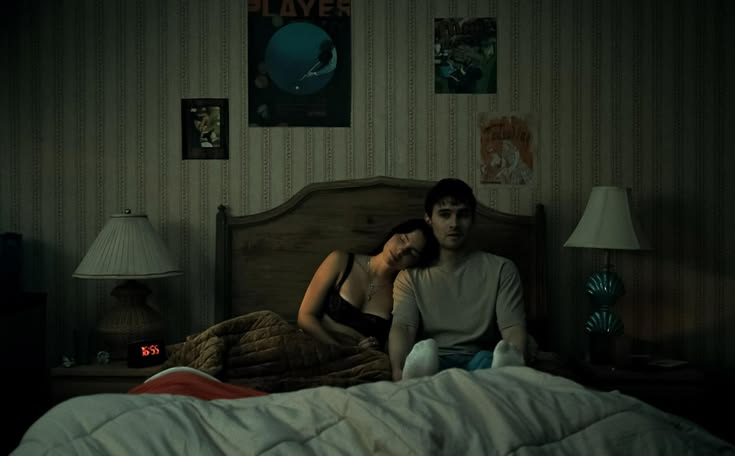
    Almost as if she couldn’t remember. She pushes multiple times to get him into her house before getting back into his car in tears. She tells Bear that her dad is sick and that she can’t handle being alone. He gives in and takes her back to his house. Her behavior and way of speaking were suddenly meek and less confident. She becomes overwhelmingly clingy and affectionate, which leads to them kissing in his bed, much to Bear’s surprise. She suddenly jolts back and scrambles off the bed, terrifying Bear with her reaction. Her face returns to a slight smile as she crawls back into the bed, saying she didn’t mean it. 

    The story quickly progresses as Nikki and Bear start dating, much to their co-workers’ shock. Bear explains her odd behavior to Ian, but quickly pretends it didn’t happen once they start dating. Nikki becomes less and less like herself and more aggressive in her attempts to keep Bear by her side. He’s so wrapped up in their “relationship” that he ignores and hides her disturbing behavior. From duck taping the front door, to feeding him cat meat in his packed lunch alongside a photo labeled “You & Not Me.” 

    These horrific actions are small blips of the real Nikki trying to communicate with Bear. She repeatedly brings his cat back into the plot as a way of reminding him of loss, the way Nikki lost herself. As well as the subtle symbolism of “curiosity killed the cat.” She had no other reference on how to love Bear besides the love he had for his cat, so she tried her best to mimic it. 

    She becomes more erratic, having outbursts at night and screaming before going back to “normal.” Their friends start to become concerned about the nature of their relationship. Bear attempts to go to a boy’s night at Ian’s without Nikki, but can’t manage to leave the house without her. The group starts to go around the room playing a drinking game. Once it lands on Nikki, she stands up with no explanation and recites a paragraph from her new writing piece, while looking into Bear’s eyes. The story sounds like Hanzel and Gretel, but quickly morphs into a sexually disturbing piece about sibling incest. 

    Nikki reads it aloud like a love story, ending it with, “A love only a willow branch could conjure.” Bear is now faced with the fact that Nikki isn’t really in love with him; it’s all forced because of his selfish wish. The real Nikki is still there, witnessing it all.  

    This intricate detail that slips through indicates that Nikki thought of Bear like a brother. That, without the One Wish Willow, she never would have loved him. 

    Even after her mental breakdowns, Bear continues to pretend like they have a great relationship. The disturbing sex scenes that happen towards the end of the film are clear symbols of sexual assault. He’s aware that Nikki isn’t herself and doesn’t truly want to be with him, but he continues to sleep with her anyway. All we can see during this moment is Nikki’s blank stare as her mouth tries to replicate human moans. It’s a belittling moment for our view of Bear. 

    Nikki once again has an outburst where her romantic persona fades, and she stabs herself in the forehead with a piece of glass. These breaks are the real side of Nikki, trying to alert Bear and the others around her that this submissive figure isn’t her. 

    As each scene gets more grotesque and skewed, Nikki becomes more intense and violent. The persona of “Nikki” begins to realize that no matter what she does or how erratic she becomes, Bear will still want to be with her, making it much easier for her to fulfill his wish. 

    Bear tries to take Nikki to the hospital, but she refuses, and he finally decides to call the number on the box. A man answers the phone and asks, “Do you want to cancel your wish?” This is a way of asking Bear if he’s learned his lesson. Instead of immediately canceling it, he questions if he can alter his wish. This is where we really start to see the selfish side of Bear: even after all the pain he has caused, he still wants to be with her. Even after acknowledging that Nikki doesn’t want to be with him. The man on the other end of the line asks if he wants to talk to Nikki. Bear questions what he means, and the man puts the real Nikki on the phone. All we can hear are blood-curdling screams of captivity. 

    The story starts to reach the end with Nikki killing their co-worker, Sarah, smashing her face with a brick when she finds Bear in the car with her late at night. Bear tries to find a way to get rid of his wish without killing himself or Nikki, so he turns to Ian. Panicked, he begged Ian to make a wish contradicting his, but can’t get him to believe the wish is real. Ian uses his wish on money, leaving Bear to deal with his own problems. He comes home to find Nikki covered in blood with Sarah’s corpse in the dining room. After closer examination, we can see that Nikki has Sarah’s tattoos drawn on her with a permanent marker and is wearing Sarah’s hair, thinking that it would make Bear love her more. Similar to her way of replicating the behavior of Bear’s cat, she changes her focus to Sarah in order to gain his affection. 

    He locks himself in the bathroom after all of his attempts prove futile. Once he’s sitting on the floor, he spots the meds that originally killed his cat in the cabinet and swallows them. Nikki, who’s still pounding on the door, is screaming at him to come out, before we hear her step away from the door. The familiar chime of the One Wish Willow plays, and with a snap, Bear is back on his feet, trying to find Nikki in a trance. 

    “Nikki” used the One Wish Willow to make Bear love her more than anyone in the world. The exact same, controlling and all consuming wish that placed her in that situation. The scene of the couple being blissfully in love lasts about nineteen seconds before Bear is convulsing and dead on the floor. In the last scene, we see Nikki screaming in absolute terror before falling back on the couch and snapping out of her trance. Her eyes widened in horror at the corpses and blood around her, unaware of how it all happened. We hear her screech at Bear, “What did you do!” 

    After watching the film, I started to question whether naming his character “Bear” was purposeful. Seeing his actions disguised as love, I thought of the famous question “Man or Bear.” Women on social media often debate whether they would rather be stuck in the woods with a man or a bear. Most women choose the bear, because with a bear, the only fear is death. If you were killed by a bear, no one would ask what you were wearing or try to defend the bear. The underlying meaning of Bear’s name, as well as his wish, reveals his true intentions and misogyny from the start. 

    Bear’s true nature is displayed from the very beginning when he uses the gift he got for Nikki, wishing for fabrication instead of truth. The One Wish Willow wasn’t the thing that was cursed; it was his wish. He wanted her as an accessory with no autonomy, not the real Nikki. The real obsession was his unnatural infatuation with Nikki, not the obsession that he forced upon her. 

  • Wuthering Heights

    I decided to spend my Valentine’s Day in the cinema with my roommate to watch the new Wuthering Heights film. I was obviously intrigued by the beauty of Margot Robbie and Jacob Elordi, but every scene was breathtaking. As someone who analyzes every frame, I was distracted by all of the striking colors and symbols throughout the film. There were countless intricate details that added more depth than I was expecting, but the one that struck me the most was the detail of human skin, in particular, their backs. We see both Cathy and Heathcliff grow up together, and the beatings he got from her father as they both matured. The transition between childhood and adulthood is seamless using the scars on his back as the progression of age. 

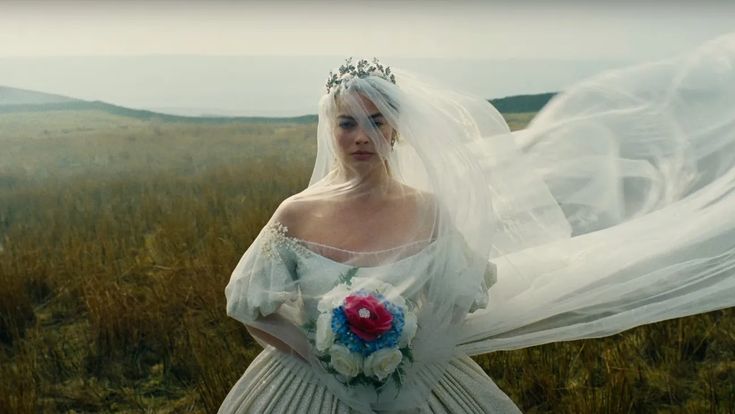
    After his first beating, we see Cathy carefully eyeing the lined blood stains through the back of his white, sheer shirt as it slowly fades into scars on the back of adult Heathcliff. The very intense zoomed-in shot shows every sweat bead and raised piece of skin. The film tends to focus on his back through different points of the story, and we finally see parallels on Cathy’s wedding day. Nelly is helping her into her wedding corset, and she proposes that they postpone the wedding. At this point, Heathcliff has been gone a year already, and Nelly tells her they cannot. She continues to tighten the corset and eventually goes to tie it when Cathy stops her, “Tighter.” Nelly tells her she won’t be able to breathe, and Cathy then repeats again, “Tighter.” The frame gets close enough to see the lines on her back from the already tight corset and the blood that is starting to stain the white fabric. This scene exactly parallels Heathcliff’s scars and the stomach-turning intricacy of human skin. It almost represents the grotesque closeness that both characters have with each other to the point of pain. Both characters look so bedazzling, but once the camera zooms in, we see every imperfection of sweat and blood. 

    Heathcliff got his scars from deciding to protect Cathy, while Cathy inflicted them upon herself. I think this detail can be very telling for both of their characters. Heathcliff is selfless throughout most of the plot, doing anything he can to benefit Cathy. Cathy is shown to be egotistical, selfish, and impulsive in most of her decisions. Her pain is inflicted upon her because of her own decisions, while Heathcliff’s pain is because of Cathy’s decisions. Though neither of them is completely innocent regarding their constant miscommunication, these parallels of self-inflicted pain and forced pain are amazing insights throughout the film. 

  • He’s Just Not That Into You

    As a woman, I think about this movie more often than I should. It was brought to my attention in one of my literary theory classes by my classmates, who were doing a presentation. Every woman in the room said that they show this movie to their friends and peers when they start to overthink their decisions regarding love. The opening scene of the movie depicts the close friendship that women have with one another, but also the disillusionment that we seem to pass on from generation to generation. 

    We see a little girl being bullied by a boy on the playground, and when she runs up to tell her mom, the only thing she says is “He’s doing that because he likes you.” This sentence brought me back to when I was young, and all the older women in my life told me the exact same thing. As much as it bothered me at first, I started to believe it. My friends were told similar fairytales, and they just seemed to evolve as we got older. 

    “He’s not calling because he thinks you’re too good for him.”

    “You’re just too mature for him right now.”

    “He’s intimidated by your beauty.”

    “He probably lost your number.”

    And so on and so forth. No matter what age I am, I hear these types of comments meant to make us feel better, but instead, they’re leading us to think that this is how women are meant to be treated. We allow ourselves to be continuously strung along and treated like shit, because that’s how all the women around us were treated. He doesn’t call when he says he will, or he’s not listening to you on your date because he’s had a rough day. But maybe the truth of the matter is that he’s just not that into you. 

    I have found myself repeating these very phrases to my friends, and It wasn’t until watching this film that I realized the mediocrity of it all. We’ve accepted that maybe women are much more complex and compassionate creatures, but in doing so, we’ve given men countless excuses for treating us subhuman. Many women have found solace in confiding in their friends, but we might be doing more harm than good in the long run. Many of these women end up settling for someone who isn’t enough, but they accept it because of the countless excuses given by their friends. This continuous cycle of delusion has only gotten worse with the age of social media, and now we have new terms and new phrases to feed to each other. 

    “His phone probably died.”

    “He didn’t mean to leave you on opened.”

    “He liked your Instagram story, that means he likes you.” 

    As I get older, it gets harder and harder to bear hearing these phrases, even though I know my friends and family are only trying to make me feel better. I still have to correct myself, but I’ve learned to say;

    “He just isn’t the one; you’ll find someone better.”

    “I would just block him; he isn’t worth your time.” 

    We feel a type of anxious excitement that comes with waiting by the phone, and we always assume that it’s that “spark” that makes us so excited to hear back from them, but it’s really the fear that they won’t call back instead of the joy we feel while actually talking to them. This term the “spark” has also given men more outs for being horrible partners as well as people. If we had friends who didn’t give us the time of day and never called back when they said they would, we would consider them bad friends. Why should relationships be any different? 

    My most valued expression as of late is “An extraordinary man is just an average woman.” This perfectly sums up the experience that the women in my life have experienced. We meet women who would give the world to you if they could, while a man who’s supposed to be your partner for life can’t even call you back or look into your eyes when you’re speaking.

    A very wise family member of mine always asks the same question when I tell her of my recent endeavors: “Is he fun or am I fun and he’s just there?” We see overly romanticized movies daily and assume that everything will just fall into place if you find a guy who checks all your boxes. But the truth is, when all is said and done, do you really enjoy being with him that much? Is it as fun as you imagined it to be?

    Though I would love to continue being a hopeless romantic, I’ve learned that real life doesn’t work that way. You aren’t the exception, but neither is he. 

  • Is Love an Option?

    I was recently asked the question “Is Love an Option” by one of my close friends. Although I wouldn’t say I’ve experienced the cliche version of love that we all know it to be. I’ve experienced many different types of love: familial, platonic, and a type of romantic affection. Love comes in all shapes and sizes, but do we really know how it starts? Having a crush or being attracted to a person can come naturally or be all consuming, but love doesn’t follow that same criteria. Love is slow and almost goes unnoticed until you find that it’s already there. I’ve watched everyone around me fall in and out of love over the years, and it honestly never looks appealing. I’ve watched my friends fight over trivial things with their boyfriends but refuse to see their flaws at the same time. Once I decide to question them, I always get the same line: “You’ll understand when you’re in love.” 

    This remark used to irritate me; I felt like a child being scolded by an adult for something I couldn’t comprehend. Since I was young, I’ve loved the idea of romance, whether it be in books or films, I couldn’t get enough of it, but the way love is interpreted in these forms is very different to the real world. Love is scary and unsettling; you never really know the outcome. Yet we still continue to love as much as we can, over and over again. Maybe it’s humans that have this affliction; we are made to naturally crave love. Some have a worse affliction than others and take whatever they are given. Even the phrase “I love you” is confusing. It’s commonly said between friends and family, but when it comes to romantic relationships, no one has the answers. Everyone I know has said the phrase at different points in their relationships, and every single one of them still doesn’t think they got it right. Too early or too late, or the wrong timing altogether. Why is it that these types of relationships are so hard to navigate? Even the sayings regarding love make it sound unnerving: “Love makes you crazy” or “Love conquers all.” 

    For those like me, who haven’t experienced this form of love, it sounds frightening and controlling. Romantic love from an onlooker’s perspective doesn’t look pretty or desireable; it seems like something no human on earth has fully figured out. Every piece of literature I’ve read has been influenced by some sort of love, and it always ends with tragedy or change. All of these factors seem to indicate that love is necessary to human life and progression; everything we do involves love. Whether it be protecting our families, hugging our friends, or being with the ones we love. Even if I decided that love was an option, it seems as though humans can’t help but pick love again and again.