Welcome to my page! I’m using this blog to share my personal works while I’m in college and have the time to write freely. Hope you enjoy!

Tag: poems

  • The Power of Women Writing

    The literary art of this period reveals that female agency was suppressed by social expectations, but writing became a powerful tool for resistance and identity. Emily Dickinson, Fanny Fern, and Elizabeth Cady Stanton are prime examples of this era. In a society shaped by “The Cult of True Womanhood” as defined by Barbara Welter, women were only allowed to have piety, purity, submissiveness, and domesticity. Any other traits, like intelligence or ambition, were purely male traits that women couldn’t possess. They weren’t allowed any kind of authority, and even writing for pleasure was seen as too complicated for the “delicate” female mind. Dickinson, Fern, and Stanton each show these limitations placed on women in different ways, as well as incorporating their own experiences into their work. Many pieces also imagine a world without these restrictions, where women have absolute autonomy. Using innovative language, rhetoric, literary techniques, and persuasion, they transform writing into a tool of female empowerment. 

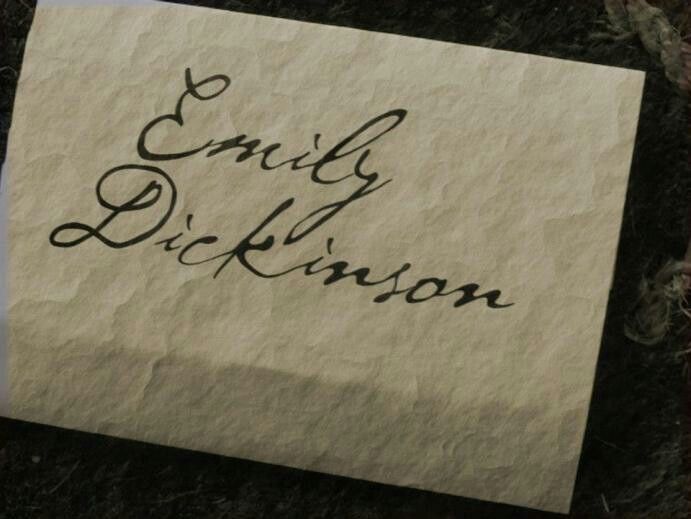
    Emily Dickinson’s literature demonstrated her hardships as a woman, even though much of her work wasn’t published during her lifetime. She wasn’t capable of living under the “4 virtues,” and her idea of real female traits shows through in her poetry. Women were seen simply as caretakers, mothers, and wives. Dickinson didn’t fit into any of these categories and devoted her life to her work, showing us how rare it was for this time period. Her poetry focuses on the trueness of the inner self and having authority over one’s own being. She wrote in a nontraditional poetry format, with compressed lines, unconventional punctuation, and intense metaphors. Dickinson’s formal rebellion in her art clearly shows her resistance to social expectations, and that she refuses to give in to them. In the poem “They Shut me up in Prose,” she compares confinement to imprisonment; she changed domestic confinement into artistic independence, and she didn’t feel chained like a housewife would to her home and family. She uses striking comparisons like, “They put me in the closet – Because they liked me ‘still.” It was a simple way to express her captivity as being a little kid in a closet. Society attempts to contain female imagination and art. The poem rejects that confinement through intellectual confidence, something that directly challenged “The Cult of True Womanhood.” 

    Dickinson uses agency through inward expression, while Fanny Fern used public satire in a clever way to confront the social as well as economic dependence forced upon women. Fern became famous through newspaper columns and essays that challenged gender equality in direct but humorous language. Women were only allowed to write books about homemaking, childcare, creative stories that always ended with marriage, or, on the rare occasion, humor. Serious works by female authors weren’t taken seriously, so Fern took it into her own hands to reach the public. Fern also strayed from “The Cult of True Womanhood.” Her voice is sharp, direct, and critical. Not a hint of submissiveness throughout any of her pieces. She frequently wrote about marriage and how it often leaves women financially and socially vulnerable. She openly mocks the assumption that women are only useful for serving their husbands and families. She reveals the hypocrisy through humor of the “sentimental” ideals of 1800’s feminism. Fern uses satire to cover every true statement and judgment of sexist norms throughout her seemingly lighthearted writing. Her famous piece “Aunt Hetty on Matrimony” contributed to her success in the writing world. She states that marriage is the “hardest way on earth of getting a living.” Fern’s career as a successful and paid writer continues to demonstrate her agency and ambition to achieve. She didn’t just write about independence; she achieved it through being a writer as well as expressing her beliefs, showing other women that it is possible. Women can claim power not only through thought and writing but by participating in society and letting their opinions be known. 

    Elizabeth Cady Stanton made perhaps the most direct challenge to women’s lack of agency by turning her writing into straight political activism. She rejected the belief that women should be excluded from civil life and should focus purely on homemaking. In her “Declaration of Sentiments,” she uses very similar language to The Declaration of Independence and directs the powerful speech straight to women’s rights. Each reader can feel the importance of the issues she raised by using such an important American document as a reference. This rhetorical strategy uses the nation’s founding ideals against the system that suppresses women, contradicting the freedom that The Declaration of Independence describes. She states, “all men and women are created equal,” changing the famous line to further push her notions. Stanton exposes the inconsistencies between democratic principles and the legal oppression of women. Her prose recounts injustices of women; lack of voting rights, restricted property rights, and exclusion from education, as well as most career paths. Stanton doesn’t portray the women of America as helpless victims but rather as rational political citizens deserving of equal citizenship. She maintains that women should have authority in the home, workplace, and government.

    These powerful writers utilize different strategies for resisting the same oppression. Dickinson finds power in the autonomy of the mind and in freedom of expression. Fern deploys satire and journalism to challenge domestic ideology and economic dependence geared toward the general public. Staton applies political rhetoric to her writing in order to demand structural change and legal equality for women. All three respond differently to “The Cult of True Womanhood” and their interpretation of the “4 virtues.” Yet they all reject the idea that a woman’s highest virtues are silence and submission. They show and represent women as thinkers, critics, creators, and citizens. 

    Literature in the 1800’s makes it clear that women didn’t have agency and were often constrained, but never successfully erased. Emily Dickinson, Fanny Fern, and Elizabeth Cady Stanton demonstrate that writing itself is a form of power in a society trying to limit female voices. Through poetry, satire, and political declaration, these authors changed language into strong resistance. Their pieces not only critique the limitations of their era but also show the possibilities for women in the future. 


    Works Cited

    Brandenburg, Vicki. “Aunt Hetty on Matrimony.” Maricopa.edu, Pressbooks, 2024, open.maricopa.edu/americanliteraturebefore1860/chapter/aunt-hetty-on-matrimony/.

    Dickinson, Emily. “They Shut Me up in Prose – (445) by Emily Dickinson.” Poetry Foundation, 23 Feb. 2020, http://www.poetryfoundation.org/poems/52196/they-shut-me-up-in-prose-445.

    Stanton, Elizabeth Cady. Declaration of Sentiments. 1848.

    “The Norton Anthology of English Literature.” Wwnorton.com, 2024, wwnorton.com/books/9781324062981.

    Welter, Barbara. “The Cult of True Womanhood: 1820-1860.” American Quarterly, vol. 18, no. 2, 1966, pp. 151–174, http://www.jstor.org/stable/2711179, https://doi.org/10.2307/2711179.