Welcome to my page! I’m using this blog to share my personal works while I’m in college and have the time to write freely. Hope you enjoy!

Tag: writing

  • Silent Hill F

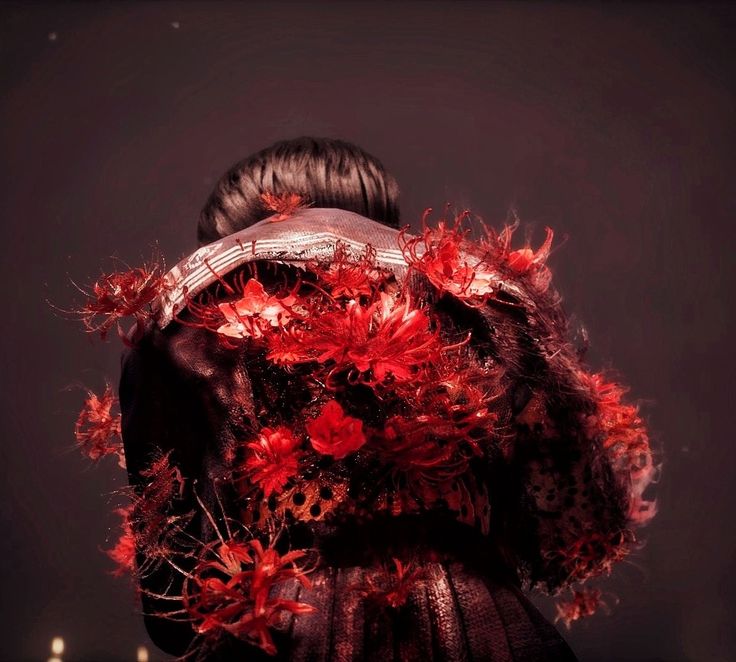
    I recently completed Silent Hill F, a new addition to the very popular game franchise. I wasn’t expecting such an intense and heartwrenching story alongside the incredible fight scenes and confusing dynamics. The story follows Hinako, a young school girl in a small town in fifties Japan. Her family consists of her parents and her older sister, Junko, who recently got married and moved out. Junko is a mysterious figure throughout the game. We never see her face or learn what truly happened to her, but it’s all jumbled in her mind. Everything is depicted through Hinako’s eyes, whether we choose to believe it’s truly happening or not. Hinako is accompanied through parts of the game by her two friends, one of them being Shu. A childhood friend, who very obviously has romantic feelings for her. Though it’s so clear to see, Hinako blatantly ignores it and acts as friendly as she can muster. As the story progresses, we see more context behind Hinako’s behavior. After witnessing her older sister’s betrothal, she’s utterly terrified of marriage and the possibility of turning into her mother. Her mother obeys her father without question and has to submit herself to him entirely. Both her mother’s and her sister’s experiences in marriage made Hinako ultimately make up her mind to avoid marriage at all cost. 

    We witness her battle multiple distorted figures throughout the story, each one pertaining to her phobia of marriage. They resemble grotesque brides channeling her fears into physical entities. Like lots of stories about women, it ends once they are married. She fights so hard in order to prevent the end of her story over and over again, as each event gets more violent. Shu continues to stay by her side, as she fights her inner self who wants to submit and let herself belong to him. We play as two different versions of her, the “real” Hinako and the one within her head. The Hinako that is in her head fights enemies and goes through countless marriage rituals as she gets closer and closer to the altar. The “real” Hinako fights continuously  to escape the pressure of parents, friends, and her older sister, to give in and let it happen. As her mind gets more twisted and her actions become less real, she gradually starts to lose her sanity completely. 

    Depending on who is playing, Hinako can give in to her imaginary groom and the idea of a suffocating marriage, or she can leave the altar with Shu, ultimately to be married off to him instead. One of the last options is seeing the aftermath in the real world, where she loses all grip on reality and kills people at her arranged wedding, running away to be on her own. Other options are just as confusing as everything else in the game; some have both Hinakos, some only have one, and mostly depict a pretend world. I received the murder ending. Although I wouldn’t say it’s the happiest, I’m relieved I got that outcome versus the ending with one of her two “love interests.” After all she endured, I think it’s a disservice to allow her to end with an outcome she so desperately wished to escape. It could be chopped up to accept the inevitable, that it’s not as scary as she imagined, but I think it diminishes the meaning behind the story. For a girl stuck in such a trapping situation, she fights diligently to give herself the freedom that she and all women deserve. 

  • He’s Just Not That Into You

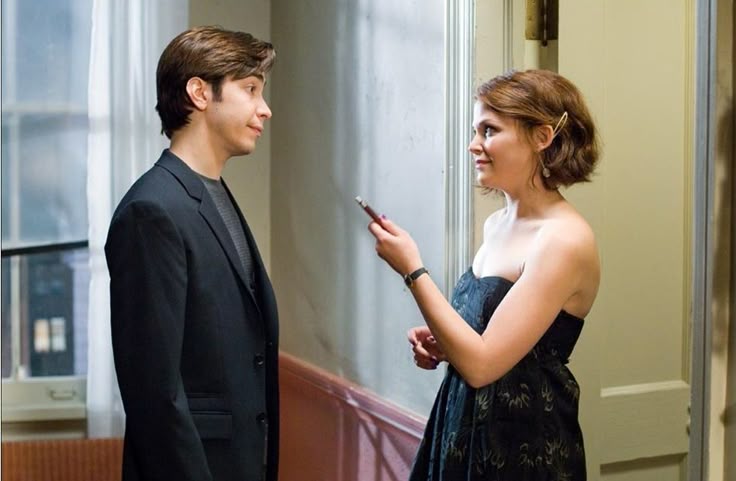
    As a woman, I think about this movie more often than I should. It was brought to my attention in one of my literary theory classes by my classmates, who were doing a presentation. Every woman in the room said that they show this movie to their friends and peers when they start to overthink their decisions regarding love. The opening scene of the movie depicts the close friendship that women have with one another, but also the disillusionment that we seem to pass on from generation to generation. 

    We see a little girl being bullied by a boy on the playground, and when she runs up to tell her mom, the only thing she says is “He’s doing that because he likes you.” This sentence brought me back to when I was young, and all the older women in my life told me the exact same thing. As much as it bothered me at first, I started to believe it. My friends were told similar fairytales, and they just seemed to evolve as we got older. 

    “He’s not calling because he thinks you’re too good for him.”

    “You’re just too mature for him right now.”

    “He’s intimidated by your beauty.”

    “He probably lost your number.”

    And so on and so forth. No matter what age I am, I hear these types of comments meant to make us feel better, but instead, they’re leading us to think that this is how women are meant to be treated. We allow ourselves to be continuously strung along and treated like shit, because that’s how all the women around us were treated. He doesn’t call when he says he will, or he’s not listening to you on your date because he’s had a rough day. But maybe the truth of the matter is that he’s just not that into you. 

    I have found myself repeating these very phrases to my friends, and It wasn’t until watching this film that I realized the mediocrity of it all. We’ve accepted that maybe women are much more complex and compassionate creatures, but in doing so, we’ve given men countless excuses for treating us subhuman. Many women have found solace in confiding in their friends, but we might be doing more harm than good in the long run. Many of these women end up settling for someone who isn’t enough, but they accept it because of the countless excuses given by their friends. This continuous cycle of delusion has only gotten worse with the age of social media, and now we have new terms and new phrases to feed to each other. 

    “His phone probably died.”

    “He didn’t mean to leave you on opened.”

    “He liked your Instagram story, that means he likes you.” 

    As I get older, it gets harder and harder to bear hearing these phrases, even though I know my friends and family are only trying to make me feel better. I still have to correct myself, but I’ve learned to say;

    “He just isn’t the one; you’ll find someone better.”

    “I would just block him; he isn’t worth your time.” 

    We feel a type of anxious excitement that comes with waiting by the phone, and we always assume that it’s that “spark” that makes us so excited to hear back from them, but it’s really the fear that they won’t call back instead of the joy we feel while actually talking to them. This term the “spark” has also given men more outs for being horrible partners as well as people. If we had friends who didn’t give us the time of day and never called back when they said they would, we would consider them bad friends. Why should relationships be any different? 

    My most valued expression as of late is “An extraordinary man is just an average woman.” This perfectly sums up the experience that the women in my life have experienced. We meet women who would give the world to you if they could, while a man who’s supposed to be your partner for life can’t even call you back or look into your eyes when you’re speaking.

    A very wise family member of mine always asks the same question when I tell her of my recent endeavors: “Is he fun or am I fun and he’s just there?” We see overly romanticized movies daily and assume that everything will just fall into place if you find a guy who checks all your boxes. But the truth is, when all is said and done, do you really enjoy being with him that much? Is it as fun as you imagined it to be?

    Though I would love to continue being a hopeless romantic, I’ve learned that real life doesn’t work that way. You aren’t the exception, but neither is he. 

  • Is Love an Option?

    I was recently asked the question “Is Love an Option” by one of my close friends. Although I wouldn’t say I’ve experienced the cliche version of love that we all know it to be. I’ve experienced many different types of love: familial, platonic, and a type of romantic affection. Love comes in all shapes and sizes, but do we really know how it starts? Having a crush or being attracted to a person can come naturally or be all consuming, but love doesn’t follow that same criteria. Love is slow and almost goes unnoticed until you find that it’s already there. I’ve watched everyone around me fall in and out of love over the years, and it honestly never looks appealing. I’ve watched my friends fight over trivial things with their boyfriends but refuse to see their flaws at the same time. Once I decide to question them, I always get the same line: “You’ll understand when you’re in love.” 

    This remark used to irritate me; I felt like a child being scolded by an adult for something I couldn’t comprehend. Since I was young, I’ve loved the idea of romance, whether it be in books or films, I couldn’t get enough of it, but the way love is interpreted in these forms is very different to the real world. Love is scary and unsettling; you never really know the outcome. Yet we still continue to love as much as we can, over and over again. Maybe it’s humans that have this affliction; we are made to naturally crave love. Some have a worse affliction than others and take whatever they are given. Even the phrase “I love you” is confusing. It’s commonly said between friends and family, but when it comes to romantic relationships, no one has the answers. Everyone I know has said the phrase at different points in their relationships, and every single one of them still doesn’t think they got it right. Too early or too late, or the wrong timing altogether. Why is it that these types of relationships are so hard to navigate? Even the sayings regarding love make it sound unnerving: “Love makes you crazy” or “Love conquers all.” 

    For those like me, who haven’t experienced this form of love, it sounds frightening and controlling. Romantic love from an onlooker’s perspective doesn’t look pretty or desireable; it seems like something no human on earth has fully figured out. Every piece of literature I’ve read has been influenced by some sort of love, and it always ends with tragedy or change. All of these factors seem to indicate that love is necessary to human life and progression; everything we do involves love. Whether it be protecting our families, hugging our friends, or being with the ones we love. Even if I decided that love was an option, it seems as though humans can’t help but pick love again and again.  

  • Lily of the Valley

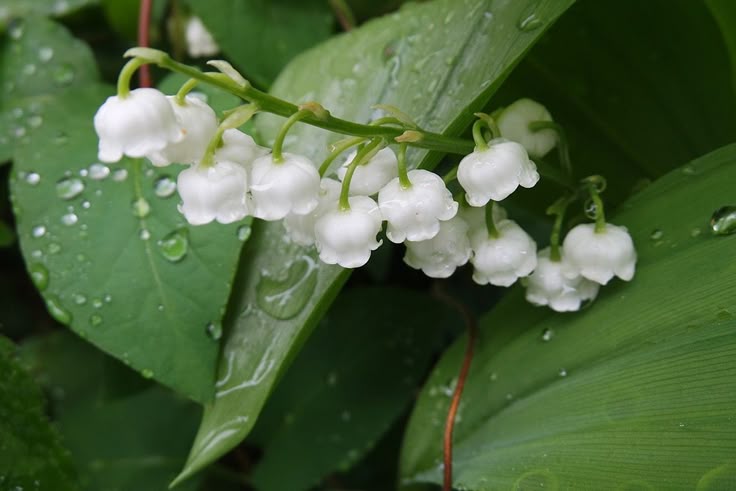
    Ever since I was young, my favorite flowers have been lilies of the valley. Maybe it was because I played Animal Crossing games growing up, and you were always awarded with a lily of the valley when you completed most of the game. But they always reminded me of willow trees; they looked sullen and fragile. Most storybooks use willow trees to depict grief or mourning, but I always thought they were the most beautiful. I never admired the picturesque green fields as much as I did the dark shade of the willows or drooping flowers. As I got older, I continued to revere these flowers, and it wasn’t until recently that I found out they’re poisonous. 

    The lily of the valley is considered a flower of love, so I found it was strangely symbolic that they were poisonous at the same time. Lilies of the valley are usually portrayed as innocent and beautiful but rare and out of reach. Similar to real beauty, it’s intertwined with violence and seduction, making the once beautiful flower a symbol of lust. The most perfect beauty is also presented as innocent and as untouched as budding flowers. Throughout literature, we see beauty and innocence usually as a downfall for most characters; it’s something that can never be properly obtained. A perfect portrayal of this is Eve in Milton’s ‘Paradise Lost.’ The Garden of Eden is supposed to be the picture of perfection, and Eve is supposed to obey Adam’s every need like God intended. She is the blueprint of innocence and beauty, but these very things lead her to the downfall of humanity. 

    It’s rare to see a character that only benefits from these traits. Lilies of the valley often look edible and approachable, but they will lead to great danger and even death. Innocence leads to temptation and curiosity, like the forbidden fruit which leads to downfall. These flowers, being flowers of love, always accurately shows that love is painful and destructive, but it’s usually wrapped in tenderness, like these gorgeous flowers. The color white is also a symbol of purity in flowers like the lily of the valley. This so-called love is also the corruption of purity and how that innocence poisons rather than heals showing the danger underneath it.