Welcome to Éire Literature! I’m using this page to share my personal works while I’m in college and have the time to write freely. Hope you enjoy!

Tag: anime

  • Caught in the Web

    The metaphorical meaning behind spiderwebs has been explored in literature for thousands of years, dating back to the 6th century BCE, when it was often used in Greek philosophy to convey fragility and political discourse. Spiderwebs or cobwebs can be seen as intricate, fragile, yet dangerous and trapping at the same time. Spiders place bait to catch their prey, leading them to their demise. They are also similar to snowflakes; the designs have radical symmetry and no two webs are the same. They are beautiful yet eerie in their purpose. We don’t often see hunting as something that is breathtaking. We wince every time we see gazelles being torn apart by lions on nature channels. Why is it that spiders get away from this conception? 

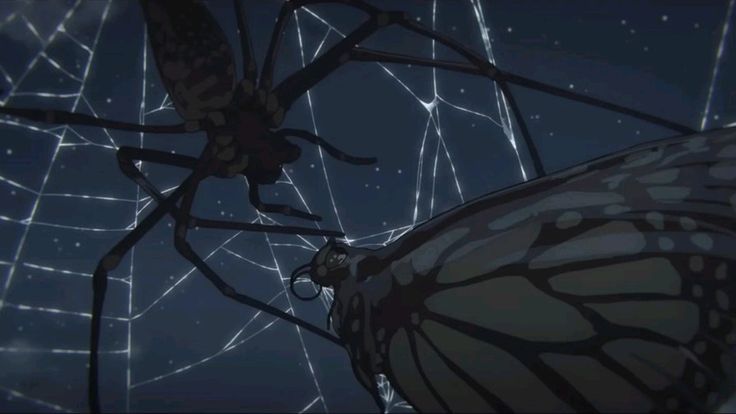
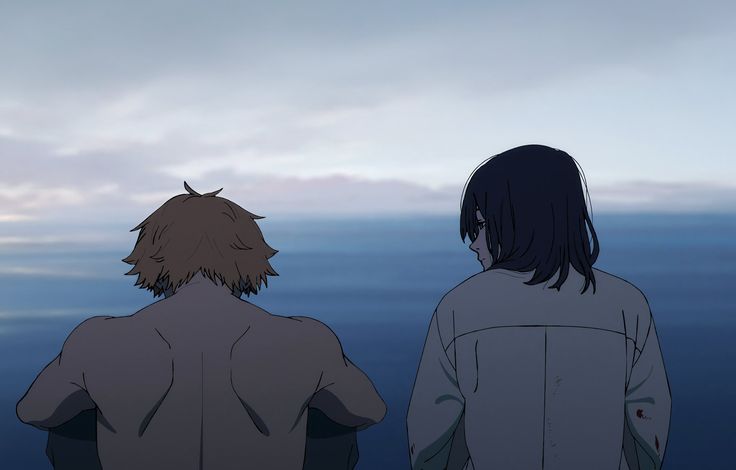
    The new ‘Chainsaw Man’ movie that recently aired this month briefly touches on this concept. The film is supposed to mess with our preconceived notions of fear and beauty. One of the most influential moments of the film is when the two main characters are teaching each other how to swim. While we watch this seemingly sweet and innocent action, we are clearly able to see the progression of a spider spinning its web. As the moment becomes more sinister and we feel a sense of dread as onlookers, we see a moth caught in the web, covered in drops of water above the pool. Once the scene ends, the spider is seen devouring the moth tangled in the web. This represents the ending of their childhood or innocence. They are both swimming without clothes on, but the scene is depicted in such a light and hopeful manner that it seems completely natural and childlike. The story depicts exactly this progression. 

    The story deeply explores the loss of innocence and how the characters seem much older than they are. We never realize this fact as watchers until they return to a school-like setting, and we realize that normal kids their age should be in classrooms. While the film explores innocence, it also carefully suggests that this is the product of raising children as weapons and state-directed violence. Although watchers are heavily targeted towards the main character, by the end of the film, we can see the battle between good and evil and the manipulation of both young characters. They were both used as assets by two different sides and never got to experience a real childhood. They never had a chance at real life. The spiderweb is the perfect analogy for what both characters experience. The web is the system that controls them, and the spider is the character who consumes the other, leaving them both with nothing. 

  • Country Mouse or City Mouse? 

    One of Aesop’s most famous fables is the question of Would you rather be a city mouse or a country mouse. The country mouse lives simply, eating only basic things, and doesn’t have much to do on the wide-open farmland, but it’s a safe place for a mouse to live peacefully. While the city mouse lives with much more extravagant food options and a whole city to explore, but risks its life every day running into humans and cats. Many would argue that the city mouse has it better, but in the original fable, the country mouse admits by the end of his visit to the city that he would rather have safety and security while eating rather than always being in a constant state of peril. How can you enjoy the taste of your food if you are in fear?

    The new ‘Chainsaw Man’ movie uses this example throughout the film as a conversation topic between characters. It seems like a very straightforward question, but the closer you look, the more you see the plotline following the exact story of the fable. ‘Chainsaw Man’ uses countless real world problems of government control, insecurity, and childhood trauma throughout its narrative. Instead of one antagonist to despise for all the pain caused in the story, there are countless uncontrollable factors. This is purposely done to make watchers feel a sense of uncontrol and hopelessness, similar to how the characters feel in their lives. 

    The story follows a young boy named Denji, who is around the age of sixteen. He was taken in by public safety from his horrible life of trying to pay off debt left by his deadbeat father, by the yakuza or mafia. He did so by killing devils for them, because of this he never went to school and never had a real life of his own. He is found useful by the government because he is now considered part devil and part human. We watch his character experience everyday things that we all take for granted, like bathing, eating breakfast, and talking to people his age. But this new life of his has come at a cost. As the film progresses, we start to see the instability in his new life; he is in even more danger than before and is being used as a pawn by the government. No matter where we are in the story, Denji is being used by some kind of authority. 

    The second character we see throughout the film is Reze, a young girl similar in age to Denji. They met randomly one day while trying to escape the rain in a telephone booth. He is oddly attracted to her, and she helps him discover more aspects of life he’s never experienced before. Such as going to school and learning how to swim. Although they are small acts, they are huge portions of the film because they are so foreign to Denji. Reze ends up being a different character than we expect. She’s actually a devil similar to Denji and was using him in order to steal his heart. This also has symbolic meaning after their time together. After this reveal in the film, we see Denji fall more into a state of distrust and deception from others. He often questions if she ever really cared for him and if everything was a lie. The story ends with Reze being defeated by Denji dragging her to the bottom of the ocean but she calmly walks away once Denji saves her from drowning. Even though he was being used by her, he still wanted to be with her in the end. He tells her to meet him at the cafe they always went to before she fades into the distance. 

    The last scene in the film is the most important for the message conveyed in the narrative. We see Reze running down the familiar alleyway in order to see if Denji is waiting for her at the cafe, like he said he would. We see Denji sitting in his usual spot with a bouquet of flowers waiting for her like nothing had happened between them. As Reze runs down this corridor and spots him, we finally get to see her tough persona crumble. It’s revealed that she never had a life or attended school either. As much as watchers believed that she was deceiving him up until that point, we can also make the argument that she was just following orders, similar to the uncontrollable factors that control Denji. They were both child soldiers and were being exploited by the government. As she is about to enter the sunlight from the alley, she is stopped by Makima, Denji’s main authority figure, and she is brutally slaughtered without a second thought. We see Reze staring at the back of Denji’s head through the windows of the cafe she can’t reach. She never reaches the light ahead of her, signifying that she forever stayed in the darkness, while Denji believed he had been abandoned. 

    Towards the middle of the film, Aesop’s fable is discussed by two different characters. It sounds funny and light-hearted at first, but it slowly becomes more sinister. Reze questions Denji with this fable, and Denji responds without hesitation that he would rather be the city mouse. He wants delicious food and more things to do in his days. This reveals a big part of his psyche to the audience. In a way, Denji is aware of his situation in life, but would rather be in danger while living life to the fullest instead of a useless, unenjoyable existence. Before Makima takes Reze’s life, she depicts how she enjoys going to the countryside in the summer and killing the mice that ravage the crops. The choice both Denji and Reze had contemplated was completely useless. Makima makes this statement as a way to assure them that no matter if they were both city or country mice, she would always control them. Similar to the power of the government in real life, no matter where you go, you can never escape control.